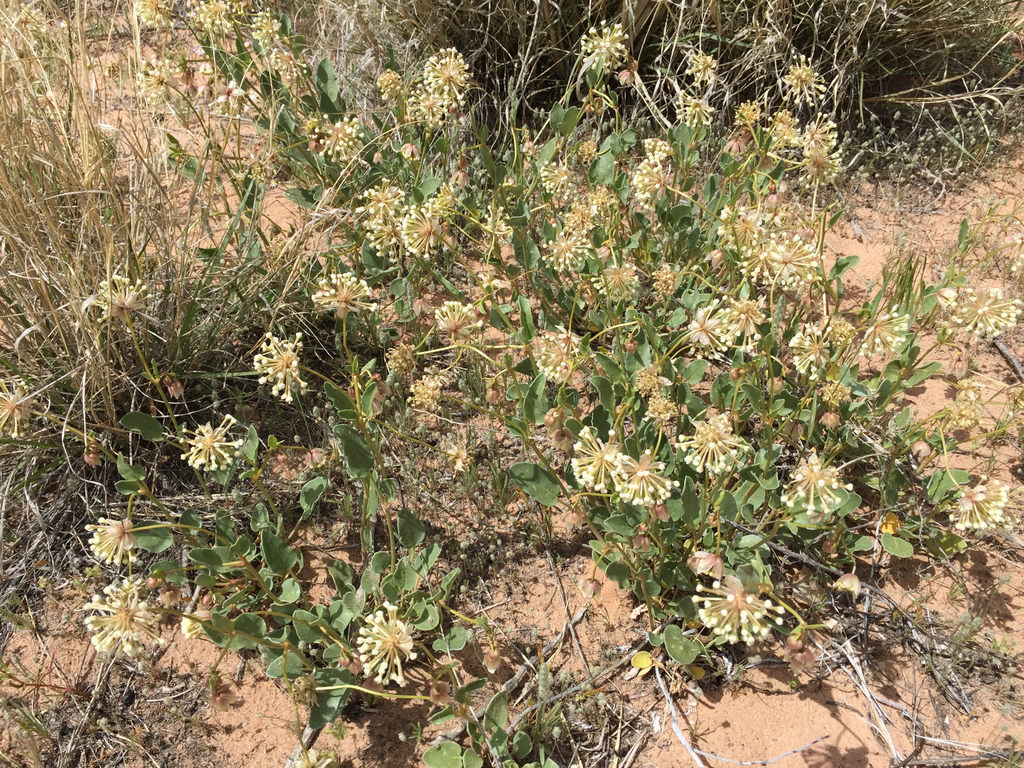
Abronia fragrans
- Origin
- North America
- Part used
- Root
- Tradition
- Traditional ethnobotany
On the dry, sandy plains of North America, Abronia fragrans unfurls its white umbels with a penetrating evening fragrance, which earned it the name sand verbena. Certain Plains and Southwest Native American nations knew its tuberous root, reserved for precise, measured uses within the local traditional pharmacopoeia.
Traditional uses
Digestive upset and abdominal pain
The dried root was traditionally used in preparations to relieve stomach pain or occasional digestive trouble, according to uses reported among certain Plains peoples.
Application on wounds and stings
A preparation of crushed root or a poultice was reportedly applied locally to insect stings, bites, or minor skin wounds.
Relief for various pains
The root went into certain traditional preparations meant to ease bodily pain, particularly headaches or muscle pain.
Reported complementary uses
Some ethnobotanical sources mention a traditional veterinary use of the root, particularly for horses, though the dosage was not precisely recorded.
Before you use it
The chemical composition of Abronia fragrans root remains poorly studied scientifically; caution calls for not self-administering this plant without the advice of a health professional or an experienced herbalist. Avoid any use in pregnant or breastfeeding women, or in children, for lack of sufficient safety data. Do not exceed occasional use and avoid any prolonged intake in the absence of sufficiently documented traditional experience. If in doubt, in case of possible drug interaction, or with a fragile health condition, consult a professional before any use.
The detailed notebook
- Prepared as a paste or decoction
- Traditional duration of use
- Known contraindications
- Related species and their uses
Where to find it
Partner herbalists — available with the detailed notebook.
Sources
PFAF, Wikipedia