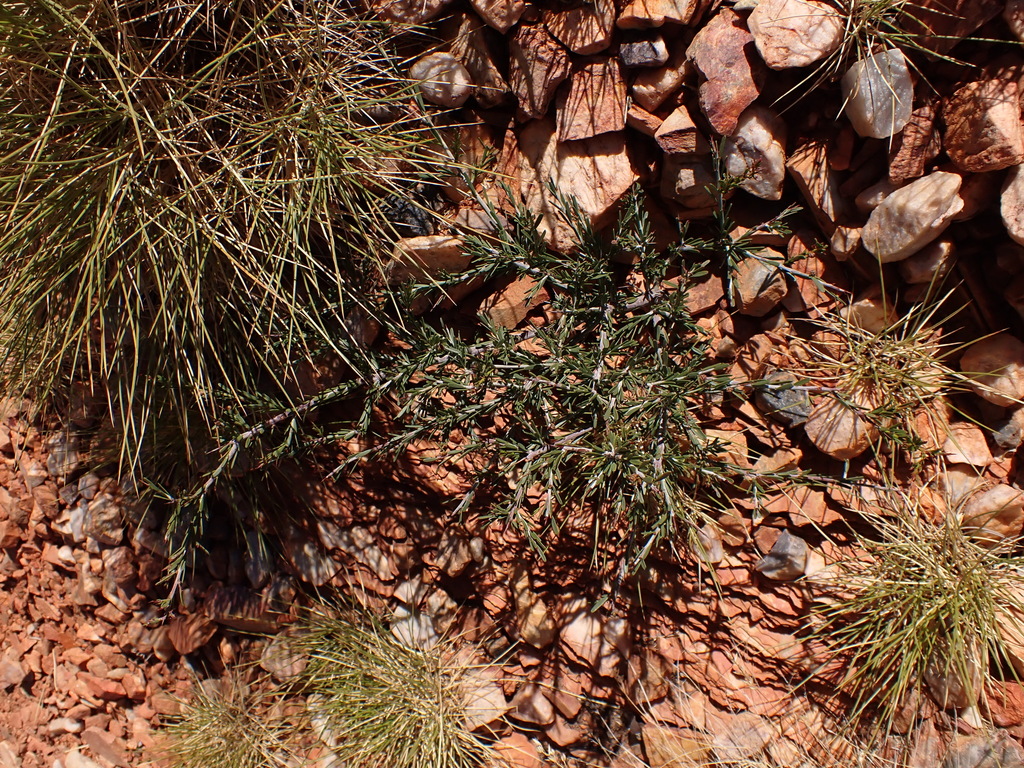
Acacia estrophiolata
- Origin
- Oceania
- Part used
- See detailed notebook
- Tradition
- Traditional ethnobotany
Beneath the vast skies of central Australia, Acacia estrophiolata, a tree with hard wood and precious shade, is among the species long recognized and used by the Aboriginal peoples of the arid zones. Its gum, bark, and wood were part of a quiet traditional use, passed down orally over generations.
Traditional uses
Soothing gum for the skin
The gum exuded by the bark was traditionally applied or dissolved to soothe minor skin irritations among the Aboriginal peoples of central Australia.
Bark for external use
The bark, crushed or ground into a paste, was occasionally used as a local application on the skin, according to traditional uses reported in arid regions.
Wood for tools and objects
The dense wood of this acacia, sometimes called local "ironwood," was traditionally worked to make tools, handles, and utilitarian objects.
Seeds and gum as a resource
Like other Australian acacias, its seeds and gum could occasionally supplement the traditional diet during times of scarcity.
Before you use it
The traditional uses of this species remain poorly documented in the accessible ethnobotanical literature: caution is called for before any use. Do not ingest preparations from this plant without the advice of a health professional or a qualified botanist. Certain acacia species contain compounds whose effects are not fully characterized; avoid any use during pregnancy or breastfeeding and in children. For skin application, test beforehand on a small area of skin and discontinue in case of reaction.
The detailed notebook
- Prepared as a paste or decoction
- Traditional duration of use
- Known contraindications
- Related species and their uses
Where to find it
Partner herbalists — available with the detailed notebook.
Sources
Wikipedia