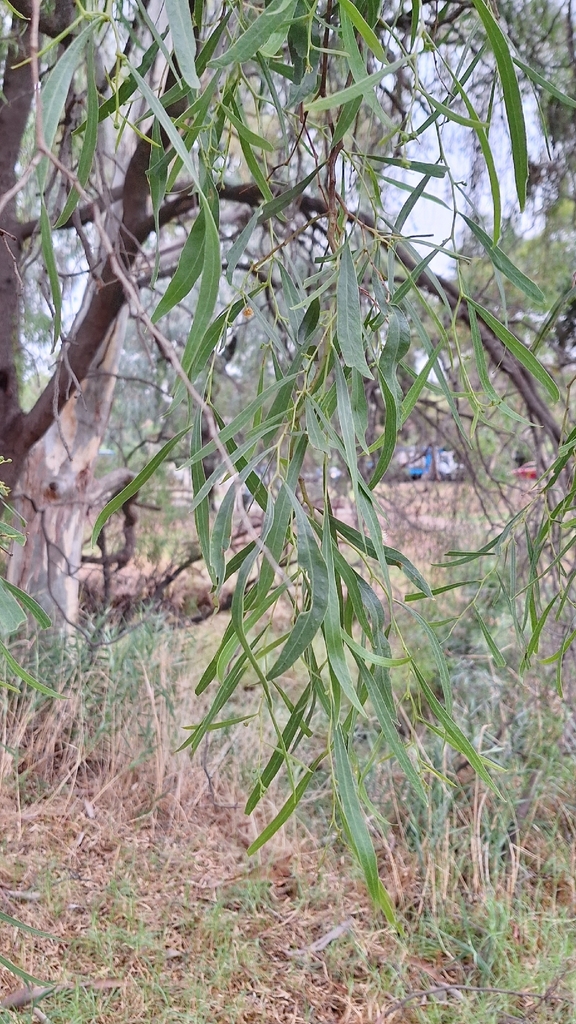
Acacia salicina
- Origin
- Oceania
- Part used
- See detailed notebook
- Tradition
- Traditional ethnobotany
A tree with drooping foliage resembling that of the willow, Acacia salicina grows in the arid regions of Australia, where Aboriginal peoples recognized various uses for it, both medicinal and craft-related. Its bark and wood accompanied the traditional uses of Indigenous communities long before the arrival of European settlers.
Traditional uses
Application for skin irritations
The crushed bark or its decoction was traditionally applied externally to soothe certain skin irritations, according to practices reported among the Aboriginal peoples of Australia.
Traditional use for pain
Preparations made from the bark are said to have been used empirically to relieve certain pains, notably muscular ones, in traditional Aboriginal medicine.
Wood used for tools and objects
The dense wood of Acacia salicina was traditionally shaped into tools, weapons, or utilitarian objects by Australian Indigenous peoples.
Occasional use as a decoction
Certain ethnobotanical sources mention an occasional use of bark decoctions for digestive purposes, although this practice remains poorly documented in the available literature.
Before you use it
Acacias contain compounds (tannins, saponins, and sometimes traces of cyanogenic compounds) whose effects on the human body remain poorly studied scientifically for this particular species. Internal use is discouraged without the advice of a health professional or a qualified herbalist, owing to a lack of safety data. Avoid any use during pregnancy or breastfeeding, and in young children, for lack of sufficient data. Do not confuse with other acacia species with different uses; rigorous botanical identification is essential before any harvest.
The detailed notebook
- Prepared as a paste or decoction
- Traditional duration of use
- Known contraindications
- Related species and their uses
Where to find it
Partner herbalists — available with the detailed notebook.
Sources
PFAF