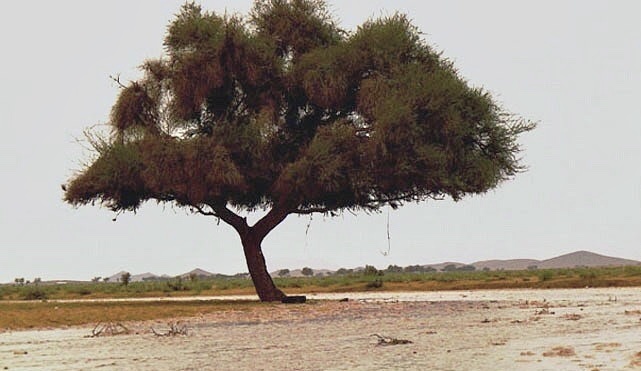
Acacia tortilis
- Origin
- Africa
- Part used
- See detailed notebook
- Tradition
- Traditional ethnobotany
Beneath the arid steppes and savannas of the Sahel, Acacia tortilis raises its umbrella-shaped silhouette, offering shade and resources to caravans and herds alike for generations. Pastoral peoples of East and North Africa have always drawn on its bark, pods, and gum, both to heal themselves and to feed themselves. This sturdy tree, a symbol of resilience in dry regions, holds a discreet but constant place in traditional African pharmacopeia.
Traditional uses
Soothing intestinal troubles
The bark and pods, rich in tannins, have traditionally been used to calm diarrhea and digestive discomfort in several pastoral communities of East Africa.
Care for wounds and skin irritation
The bark decoction was applied as a wash on wounds, cuts, and skin conditions, for its astringent properties recognized in local tradition.
Soothing throat ailments
As a gargle, the infused or decocted bark was traditionally used to soothe sore throats and oral inflammation.
A traditional fortifier
The gum and young pods, sometimes chewed or eaten, were considered tonic and nourishing in certain arid regions where the tree grows.
What to know before use
Prolonged or high-dose internal use is not recommended without the advice of a health professional, due to limited documentation on long-term effects. Not recommended for pregnant or breastfeeding women, as well as young children, for lack of sufficient safety data. The high tannin content can irritate the mucous membranes or disrupt the absorption of certain nutrients and medications with repeated use. Avoid self-gathering without certain identification, as Acacia tortilis can be confused with other thorny species of the same family.
The detailed notebook
- Prepared as a paste or decoction
- Traditional duration of use
- Known contraindications
- Related species and their uses
Where to find it
Partner herbalists — available with the detailed notebook.
Sources
PFAF