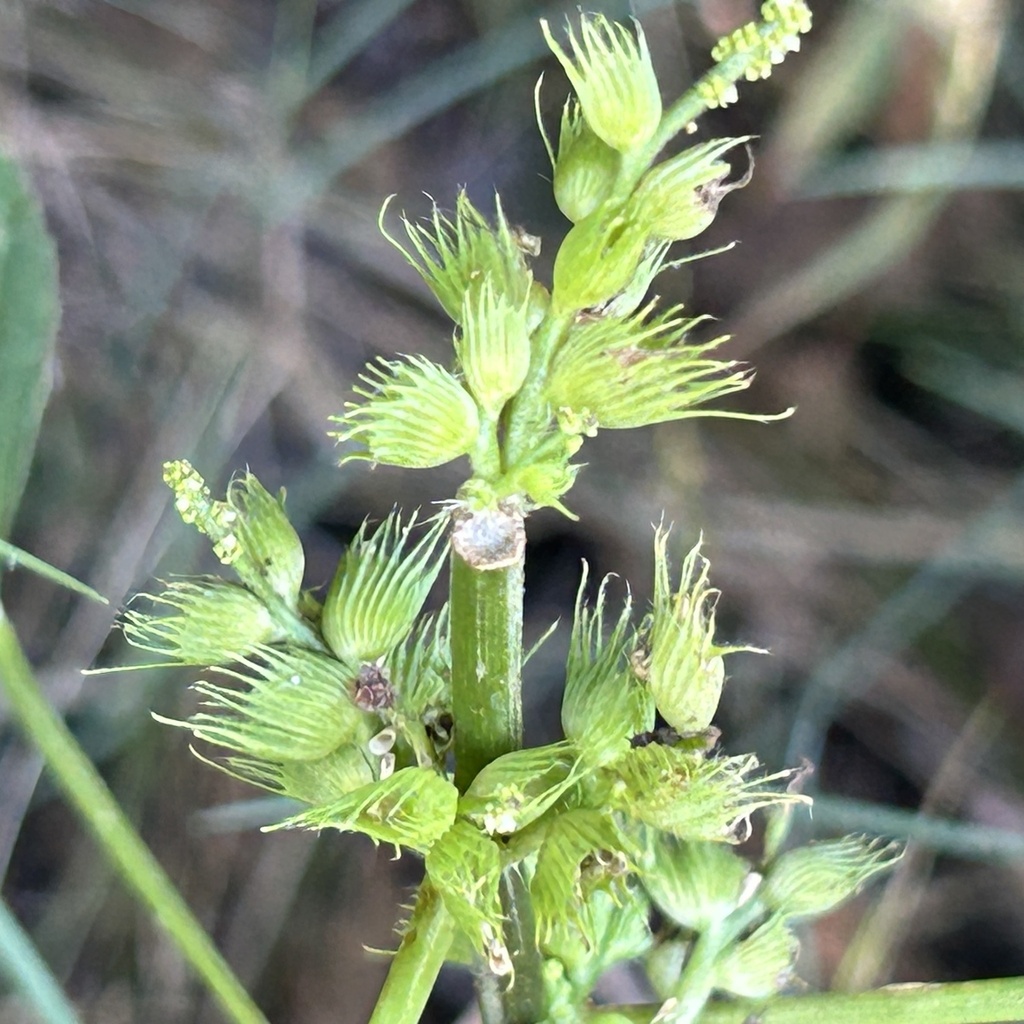
Acalypha ciliata
- Origin
- Africa
- Part used
- See detailed notebook
- Tradition
- Traditional ethnobotany
A discreet herb of the savannas and edges of tropical Africa, Acalypha ciliata often grows alongside other field weeds, almost invisible until an herbalist's eye settles on it. Village traditions have long known it as a plant for simple, everyday care, passed down from generation to generation in local oral knowledge.
Traditional uses
Traditional care for minor wounds
Fresh, crushed leaves were applied as a poultice on superficial wounds, cuts, and skin irritation in certain village pharmacopeia of West Africa.
A traditional use against intestinal troubles
A decoction of the aerial parts was traditionally drunk to soothe certain digestive disorders, particularly as part of folk remedies against intestinal parasites.
A folk remedy for cough
In some local traditions, a leaf-based preparation was used to calm coughing and mild respiratory ailments.
Traditional treatment for skin conditions
The sap or juice of crushed leaves was used, according to certain reported uses, to treat skin conditions such as scabies and itching.
What to know before use
A traditional use with little scientific documentation: caution is required, particularly regarding dosage and duration of use. Do not use in pregnant or breastfeeding women, for lack of sufficient safety data. Avoid prolonged internal use without the advice of a health professional trained in plants. Certain species of the genus Acalypha contain compounds that can irritate the mucous membranes or cause skin reactions; perform a preliminary test for topical use.
The detailed notebook
- Prepared as a paste or decoction
- Traditional duration of use
- Known contraindications
- Related species and their uses
Where to find it
Partner herbalists — available with the detailed notebook.
Sources
PFAF