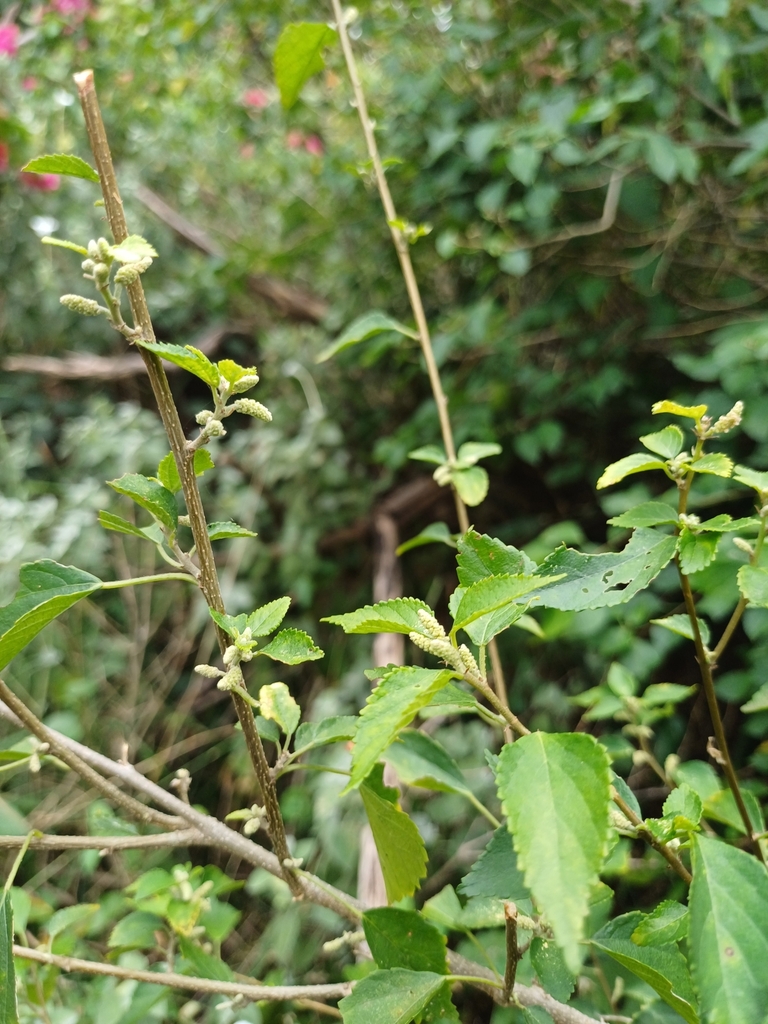
Acalypha fruticosa
- Origin
- Africa
- Part used
- See detailed notebook
- Tradition
- Traditional ethnobotany
A discreet shrub of African savannas and edges, Acalypha fruticosa has long accompanied the practices of traditional healers in East and Southern Africa. Its leaves and roots, valued in local pharmacopeia, have found a place in various domestic uses passed down from generation to generation. Western scientific documentation on this species nonetheless remains limited, which calls for a cautious reading of its uses.
Traditional uses
Traditional care for skin wounds
Crushed or bruised leaves were traditionally applied to wounds, cuts, or skin irritation in certain East African communities.
A traditional use against digestive troubles
A decoction of leaves or roots was sometimes used to soothe stomach aches or diarrhea, according to local folk medicine.
A traditional use against cough
Certain communities used a leaf-based preparation to relieve coughing and respiratory ailments.
A traditional soothing local use
Warmed or macerated leaves were applied as a poultice on painful or swollen areas, according to certain African herbal traditions.
What to know before use
A traditional use with little scientific documentation: seek the advice of a health professional before any use. Avoid any prolonged or unsupervised internal use, as the plant's full chemical composition is not well established. Not recommended for pregnant or breastfeeding women and young children, as a precaution. Do not use as a substitute for medical treatment, particularly in cases of infected wounds or persistent symptoms.
The detailed notebook
- Prepared as a paste or decoction
- Traditional duration of use
- Known contraindications
- Related species and their uses
Where to find it
Partner herbalists — available with the detailed notebook.
Sources
PFAF