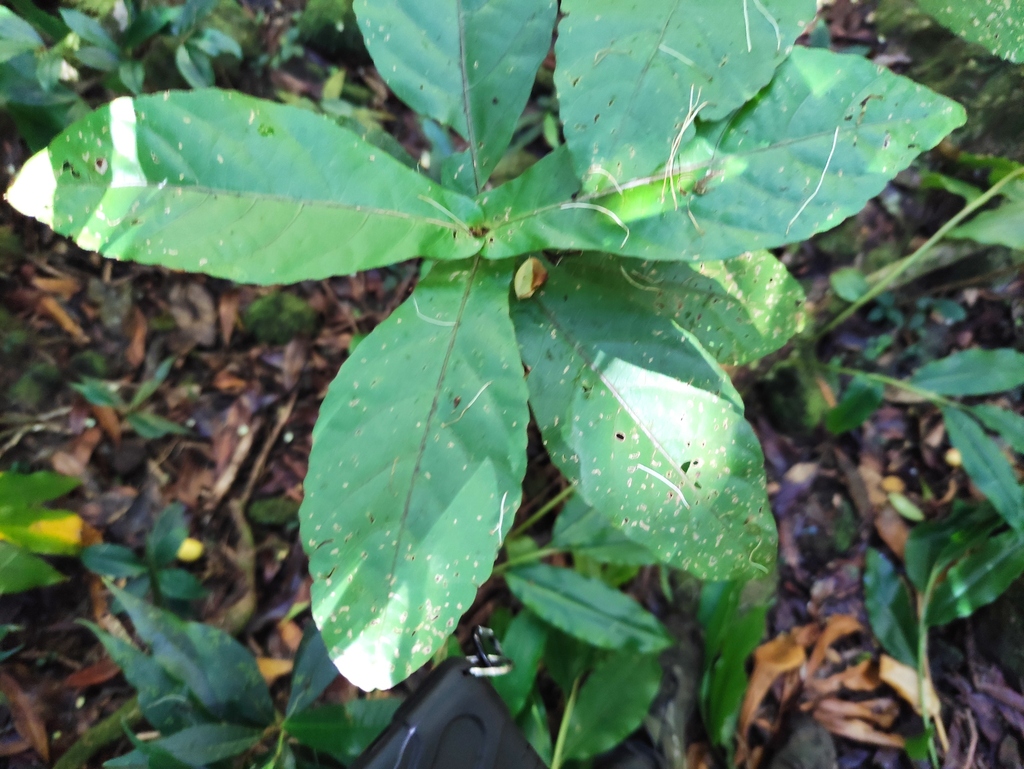
Acalypha integrifolia
- Origin
- Africa
- Part used
- Leaves
- Tradition
- Traditional ethnobotany
On the highlands and coasts of Madagascar as well as in certain regions of East Africa, Acalypha integrifolia is a plant of homestead gardens and forest edges, whose leaves have long found a place in traditional domestic uses. Field herbalists' notebooks mention it mainly as a supporting plant for the skin and everyday minor ailments, passed down more through family oral tradition than through learned treatises.
Traditional uses
Traditional care for skin conditions
The leaves, applied as a poultice or wash, were traditionally used on irritated skin or superficial lesions, in Malagasy and East African folk uses.
A traditional use for digestive troubles
A light leaf decoction is mentioned in certain local practices to help with mild digestive disorders, though this use is not widely standardized.
Application on minor wounds
Crushing fresh leaves into a poultice is among the traditional practices reported to promote cleanliness and the healing of minor superficial wounds.
A traditional use against feverish states
In certain local pharmacopeia, a leaf-based preparation was given to help with feverish states, alongside other household remedies.
What to know before use
Scientific data on the safety and toxicity of Acalypha integrifolia remain limited; caution is required for any internal use. Internal use is not recommended for pregnant or breastfeeding women, as well as young children, in the absence of sufficient data. Do not use for prolonged self-medication; consult a health professional or experienced herbalist before any use, particularly internal. For skin application, test on a small area beforehand and stop in case of reaction or irritation.
The detailed notebook
- Prepared as a paste or decoction
- Traditional duration of use
- Known contraindications
- Related species and their uses
Where to find it
Partner herbalists — available with the detailed notebook.
Sources
PFAF, Wikipedia