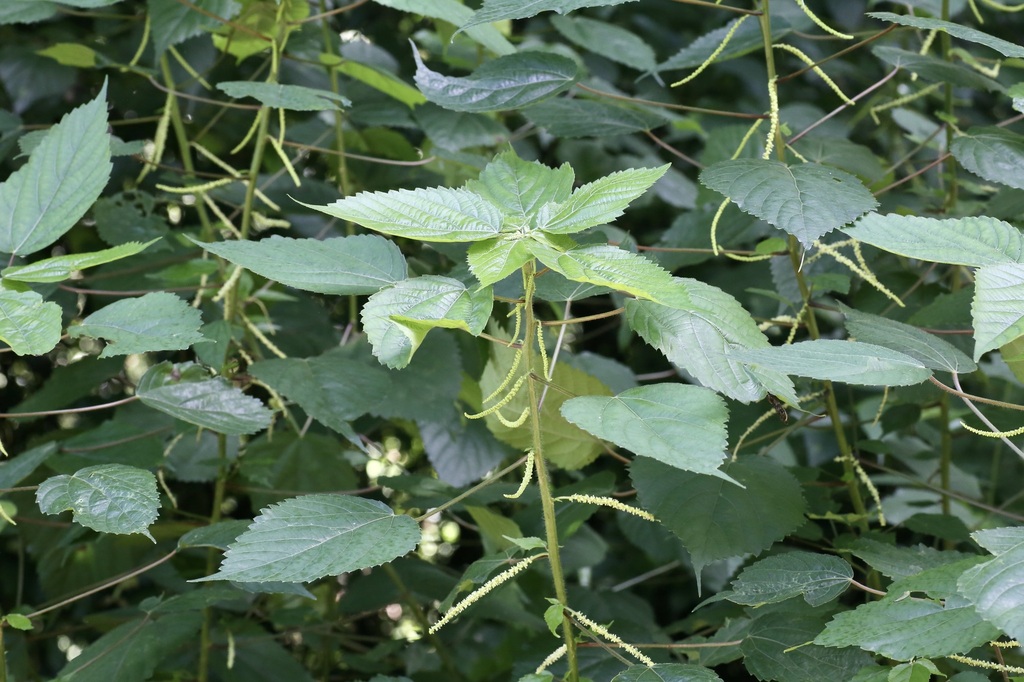
Acalypha ornata
- Origin
- Africa
- Part used
- See detailed notebook
- Tradition
- Traditional ethnobotany
In the wooded regions of East and Central Africa, Acalypha ornata has long been recognized by traditional healers as a plant useful in the home and homestead garden. Its leaves, marked with pronounced veins, have given rise to folk uses passed down orally from generation to generation. The Herbier des Anciens gathers the traces here, with the caution warranted by a plant still little studied by modern science.
Traditional uses
Traditional care for skin wounds
Fresh leaves, crushed and applied as a poultice, were traditionally used in certain communities to help heal minor wounds or skin irritation.
An empirical use against digestive troubles
A light decoction of leaves or bark is mentioned in certain folk practices to relieve temporary digestive discomfort, though this use is not well documented scientifically today.
Traditional fumigation
In certain local traditions, the dried aerial parts were burned or used as a fumigation to clear the respiratory tract during colds.
Traditional veterinary use
The plant is sometimes cited in local veterinary uses, particularly for livestock, although these practices remain loosely formalized and passed down mainly orally.
What to know before use
Scientific documentation on Acalypha ornata remains limited; as with many species of the genus Acalypha, some caution regarding the potential toxicity of certain compounds is recommended. Avoid any internal use without the advice of a health professional or experienced herbalist specifically familiar with this species. Not recommended for pregnant or breastfeeding women, as well as young children, in the absence of sufficient safety data. For skin application, perform a preliminary test on a small area of skin to rule out any risk of an irritant reaction.
The detailed notebook
- Prepared as a paste or decoction
- Traditional duration of use
- Known contraindications
- Related species and their uses
Where to find it
Partner herbalists — available with the detailed notebook.
Sources
PFAF