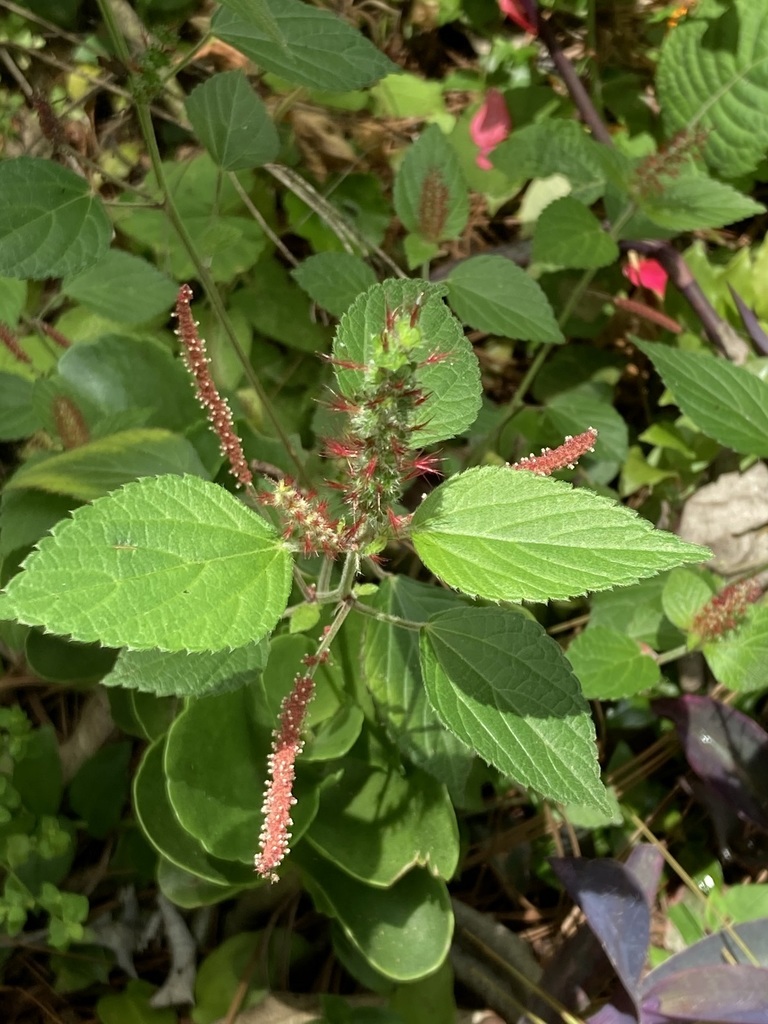
Acalypha phleoides
- Origin
- North America
- Part used
- See detailed notebook
- Tradition
- Traditional ethnobotany
An unassuming herb of the arid lands of North America, Acalypha phleoides belongs to that group of roadside plants whose uses were passed down from generation to generation in the rural communities of Mexico and the southern United States. Its very name, derived from the Greek "akalephe" (nettle), recalls the stinging look of its foliage, long used in external applications. Little studied by modern science, it remains known mainly through the oral memory of traditional herbalists.
Traditional uses
Soothing skin irritation
The fresh or dried plant was traditionally applied as a compress to irritated skin or skin marked by minor wounds, in a local and temporary use.
Care for bites and itching
Some communities reported the use of preparations made from crushed leaves to calm itching following insect bites.
Washing and cleaning minor wounds
A diluted decoction sometimes served as an external wash to clean minor superficial wounds, according to regional folk uses.
Before you use it
Only traditional external use is documented; ingestion is not recommended in the absence of sufficient data on its composition. Avoid any prolonged contact with broken skin or mucous membranes without the advice of a health professional. Not recommended for pregnant or breastfeeding women, or young children, for lack of safety data. Carry out a patch test on a small area before any wider application.
The detailed notebook
- Prepared as a paste or decoction
- Traditional duration of use
- Known contraindications
- Related species and their uses
Where to find it
Partner herbalists — available with the detailed notebook.
Sources
PFAF, Wikipedia