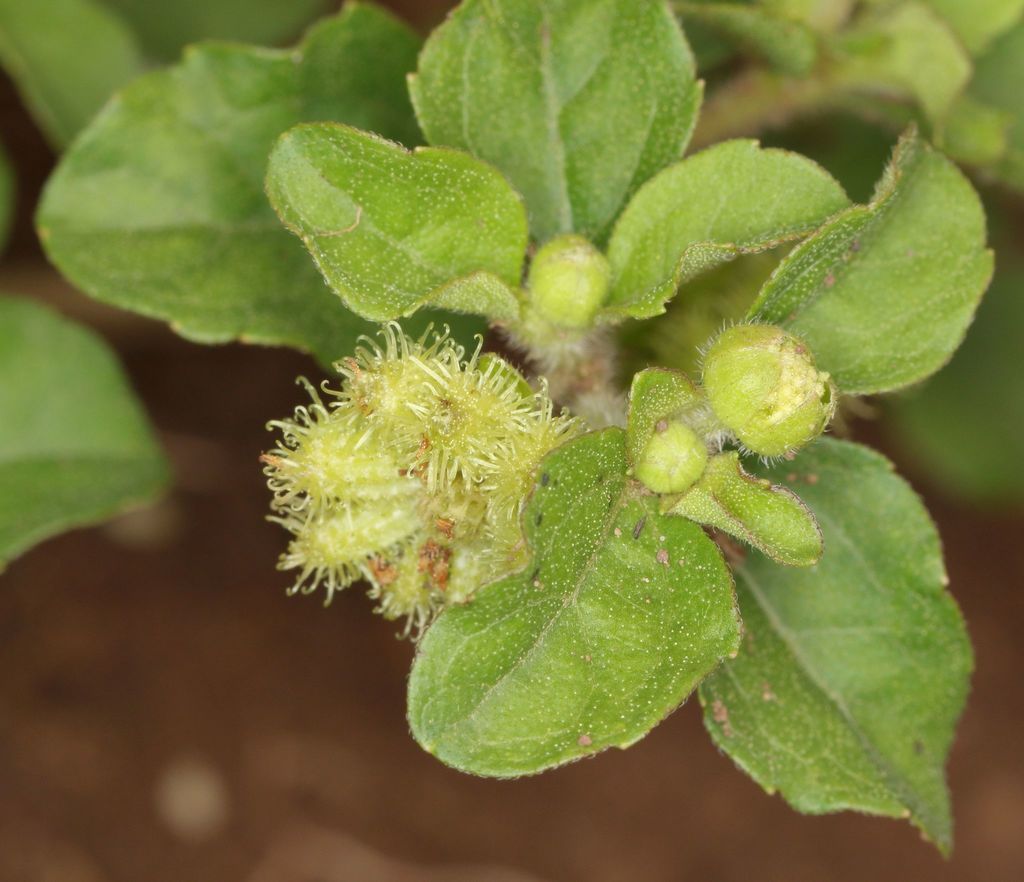
Acanthospermum australe
- Origin
- South America
- Part used
- See detailed notebook
- Tradition
- Traditional ethnobotany
Native to the lowlands of South America, Acanthospermum australe is a small creeping plant with spiny fruit, long regarded as a mere weed before popular traditions came to recognize its virtues. In South American herbalist notebooks, it appears discreetly, reserved for localized and well-defined uses.
Traditional uses
Traditional digestive support
In South America, a light decoction of the whole plant was sometimes used to soothe digestive discomfort and passing intestinal troubles.
External use on the skin
The crushed plant, or as a decoction, was traditionally used in local applications to cleanse and soothe certain skin irritations.
A popular fever tradition
Certain rural communities used an infusion of the aerial parts as a traditional remedy against feverish states.
A traditional gynecological use
Traditional usages report an application of the plant related to menstrual troubles, a use to be approached with great caution given how limited its documentation remains.
What to know before use
A plant with little scientific documentation: caution calls for consulting a healthcare professional before any internal use. Its traditional use related to women's health should be strictly avoided during pregnancy or breastfeeding. Do not use in children in the absence of sufficient safety data. Avoid prolonged self-medication or high doses, due to a lack of reliable toxicological data.
The detailed notebook
- Prepared as a paste or decoction
- Traditional duration of use
- Known contraindications
- Related species and their uses
Where to find it
Partner herbalists — available with the detailed notebook.
Sources
PFAF