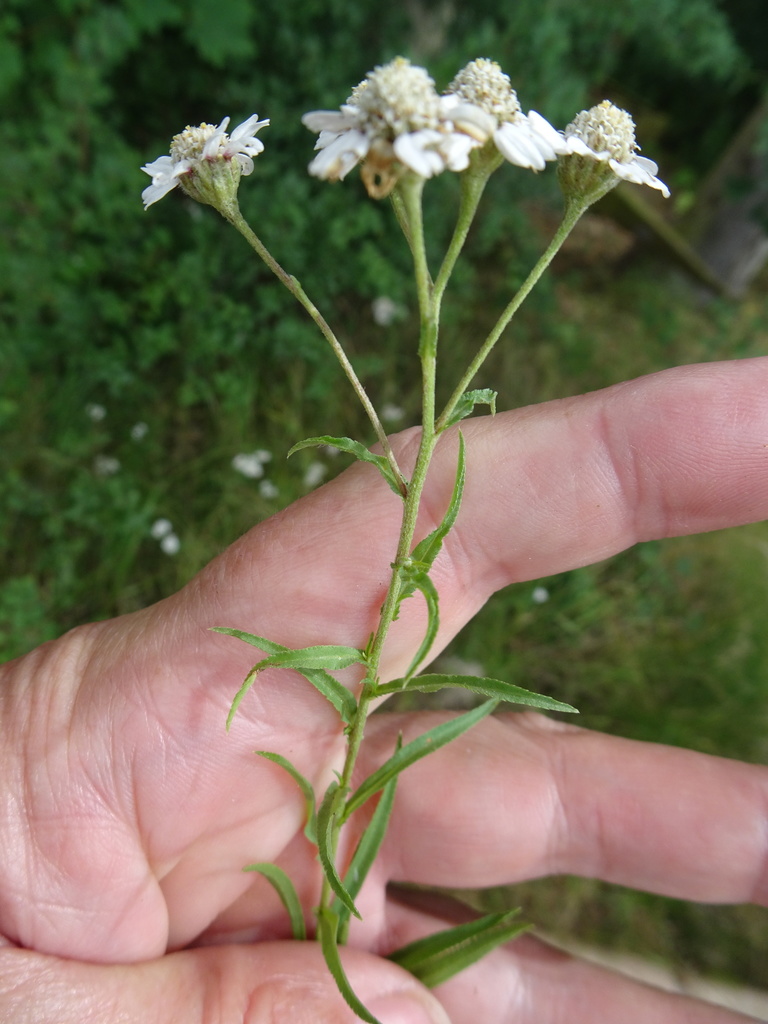
Achillea ptarmica
- Origin
- Europe
- Part used
- See detailed notebook
- Tradition
- Traditional ethnobotany
Sneezewort, a discreet cousin of yarrow, grew readily in the damp meadows and ditches of Europe. Its very name recalls the old use of its dried powder, prized for inducing sneezing and clearing the airways. Old herbalists distinguished it from its more famous relative, while recognizing in it similar virtues, particularly for oral care and minor wounds.
Traditional uses
Sneezing powder
The dried flower, ground to a powder, was traditionally inhaled to induce sneezing and clear congested sinuses, a use that is the very origin of the plant's common name.
Care for toothache
The root or fresh leaves, reputed to be mildly irritating and counter-irritant, were chewed to temporarily ease toothache.
Application to minor wounds
Crushed leaves were applied as a poultice to superficial cuts, in the same tradition as other yarrows used to promote wound closure.
Traditional bitter use
Like other bitter-tasting plants of the daisy family, it was sometimes used as a light infusion to stimulate appetite and digestion.
Before you use it
A plant with little modern toxicological documentation: reserve it for occasional, cautious traditional use, under the guidance of a healthcare professional or experienced herbalist. Like other yarrows, it can cause allergic skin reactions or contact dermatitis in people sensitive to the daisy family. Inhaling the powder should be avoided by people with asthma or fragile respiratory health, as the induced sneezing can be violent. Use is not recommended for pregnant or breastfeeding women, or young children, due to a lack of safety data.
The detailed notebook
- Prepared as a paste or decoction
- Traditional duration of use
- Known contraindications
- Related species and their uses
Where to find it
Partner herbalists — available with the detailed notebook.
Sources
PFAF, Wikipedia