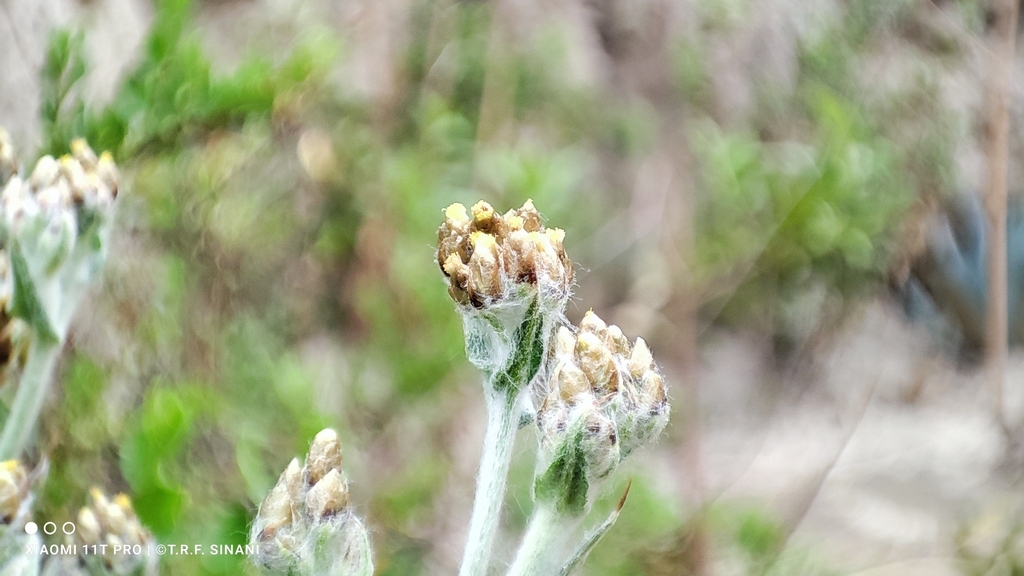
Achyrocline satureioides
- Origin
- South America
- Part used
- See detailed notebook
- Tradition
- Traditional ethnobotany
Known in South America as “marcela” or “macela,” Achyrocline satureioides is a small composite plant with golden flower heads that herbalists in the Argentine, Uruguayan, and Brazilian countryside traditionally gathered to soothe stomach troubles. Popular notebooks of the Southern Cone have mentioned it for generations as a familiar plant of everyday infusions, often paired with other local digestive herbs.
Traditional uses
Digestive comfort and bloating
Marcela was traditionally infused after meals to relieve digestive discomfort, bloating, and stomach heaviness.
Mild soothing and relaxation
In popular use, it was sometimes combined with other calming plants to promote gentle relaxation at the end of the day.
Traditional liver support
Certain rural traditions credited it with supporting the liver and gallbladder, particularly after copious meals.
An infusion for the respiratory tract
It also featured in popular blends intended to accompany mild colds and seasonal discomfort.
What to know before use
Does not replace medical advice, particularly in cases of persistent or severe digestive troubles. As a precaution, use is discouraged for pregnant or breastfeeding women, due to insufficient data. If undergoing medication treatment, seek a healthcare professional's advice before regular consumption. Avoid prolonged consumption without the advice of a herbalist or qualified professional.
The detailed notebook
- Prepared as a paste or decoction
- Traditional duration of use
- Known contraindications
- Related species and their uses
Where to find it
Partner herbalists — available with the detailed notebook.
Sources
PFAF, Wikipedia