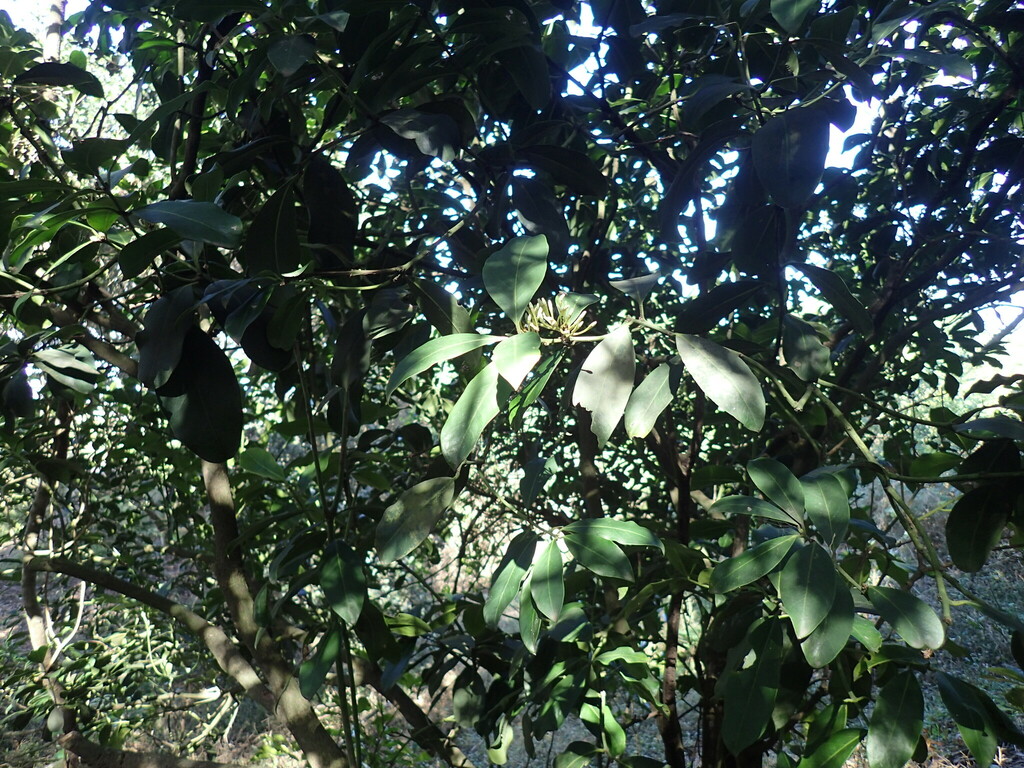
Acokanthera oblongifolia
- Origin
- Africa
- Part used
- See detailed notebook
- Tradition
- Traditional ethnobotany
Acokanthera oblongifolia, a shrub of the coastal regions and bushveld of Southern and East Africa, has long been known to local populations for the fearsome toxicity of its sap and fruit. Traditional hunters drew from it a powerful arrow poison, while certain very limited medicinal uses, dosed with extreme caution, were sometimes attributed to it by traditional healers. This entry is above all of historical and ethnobotanical interest.
Traditional uses
A traditional arrow poison
The sap and bark of Acokanthera oblongifolia were traditionally turned into a hunting poison by several peoples of Southern and East Africa, used on arrowheads.
Pest control
Highly diluted preparations made from this plant may have been used empirically to repel or eliminate certain parasites and predators, according to local rural practices.
Reported occasional external uses
Certain traditional healers are said to have used, with extreme caution and in infinitesimal amounts, external preparations against certain pains, a use that is nonetheless little documented and not recommended today.
What to know before use
A highly toxic plant: all parts, particularly the fruit, seeds, and milky sap, contain potentially fatal cardiotonic glycosides. Never ingest in any form; contact of the sap with an open wound or mucous membranes is dangerous. To be strictly avoided in pregnant or breastfeeding women, children, and anyone undergoing cardiac treatment (major risk of interaction). Any use, even external, should be avoided outside the supervision of a qualified professional specifically familiar with this species.
The detailed notebook
- Prepared as a paste or decoction
- Traditional duration of use
- Known contraindications
- Related species and their uses
Where to find it
Partner herbalists — available with the detailed notebook.
Sources
PFAF