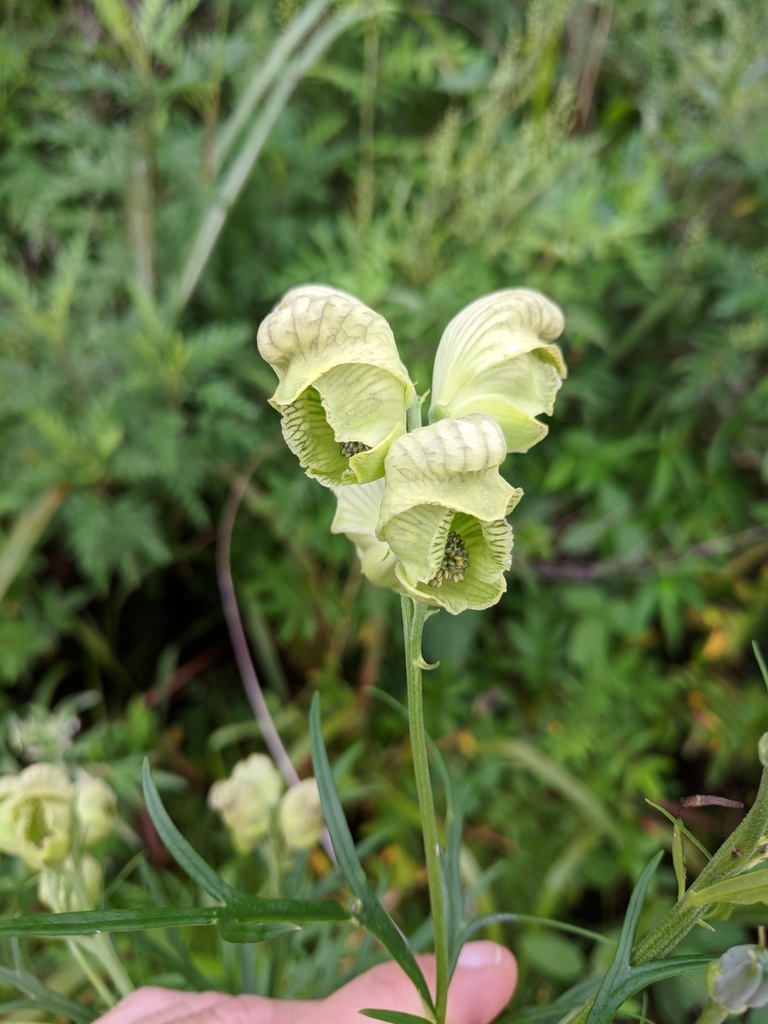
Aconitum coreanum
- Origin
- Asia
- Part used
- See detailed notebook
- Tradition
- Traditional ethnobotany
In traditional East Asian pharmacopeia, Korean aconite holds a place apart, reserved for the expert hands of herbalists trained in its preparation. A root as feared as it is respected, it belongs to that family of plants the ancients called "poisons that heal," its potency demanding precise knowledge to be tamed. Its presence in ancient treatises attests to an ancestral use, always surrounded by strict rules of preparation and dosage.
Traditional uses
Relief of joint pain
The prepared root was traditionally used externally against joint and muscle pain attributed to cold and dampness, according to the principles of ancient Chinese and Korean medicine.
Rheumatic pain
In certain traditions, preparations based on processed aconite were used to relieve chronic rheumatic conditions, always after a rigorous detoxification process of the root.
Traditional warming of the body
Aconite was among the so-called "warming" plants of Chinese pharmacopeia, historically used to stimulate vitality in cases of severe internal coldness, under the supervision of an experienced practitioner.
Ancient liniments and ointments
The roots, once thoroughly processed, were used in ointments or liniments intended for strictly external use on painful areas.
What to know before use
Highly toxic plant in its raw state: all parts, particularly the root, contain alkaloids (aconitine) that can cause serious, sometimes fatal, cardiac and nervous disorders, even at low doses. Internal use is strictly discouraged without processing and supervision by a professional qualified in traditional Chinese pharmacopeia; never use the raw or untreated root. Contraindicated during pregnancy, breastfeeding, in children, and in anyone with cardiac disorders or on medication, due to risks of interactions and cumulative toxicity. Growing, possessing, or using this plant may be subject to regulation depending on the country; check local rules before any handling.
The detailed notebook
- Prepared as a paste or decoction
- Traditional duration of use
- Known contraindications
- Related species and their uses
Where to find it
Partner herbalists — available with the detailed notebook.
Sources
PFAF, Wikipedia