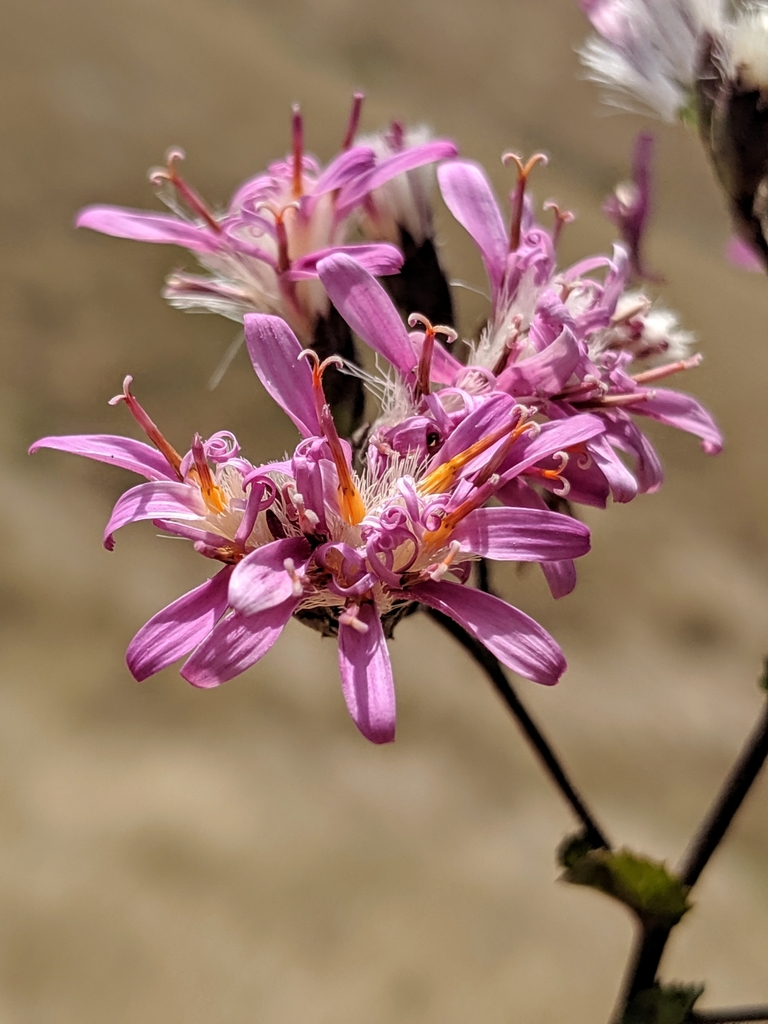
Acourtia microcephala
- Origin
- North America
- Part used
- See detailed notebook
- Tradition
- Traditional ethnobotany
On the dry hillsides and chaparral of California, Acourtia microcephala, sometimes called "desertbroom-mallow" or "sacapellote" by herbalists of the Hispano-American tradition, holds a discreet but old place in the folk pharmacopoeias of the North American Southwest. This member of the daisy family, with its small clustered flower heads, was traditionally associated with skin care and certain winter ailments. Its use nonetheless remains poorly documented by modern science, which calls for caution and restraint in its use.
Traditional uses
Soothing skin irritation
The leaves were traditionally applied as a poultice to minor skin conditions, in the folk uses of tribes and communities of the American Southwest.
Support during colds
A mild decoction of the aerial parts was reportedly used occasionally to help with flu-like states and congested airways.
Rubs for joint pain
Some local traditions report the use of external preparations made from this plant to relieve muscle and joint pain.
Occasional use for mild digestive trouble
More anecdotally, a diluted infusion was reportedly used to ease occasional digestive discomfort, though this practice remains poorly attested in written sources.
Before you use it
A traditional use poorly documented scientifically: caution is called for, particularly for internal use. Avoid any use in pregnant or breastfeeding women, for lack of sufficient safety data. Do not use in children without the advice of a qualified health professional. Consult a herbalist or a doctor before any use, particularly if undergoing medical treatment.
The detailed notebook
- Prepared as a paste or decoction
- Traditional duration of use
- Known contraindications
- Related species and their uses
Where to find it
Partner herbalists — available with the detailed notebook.
Sources
PFAF