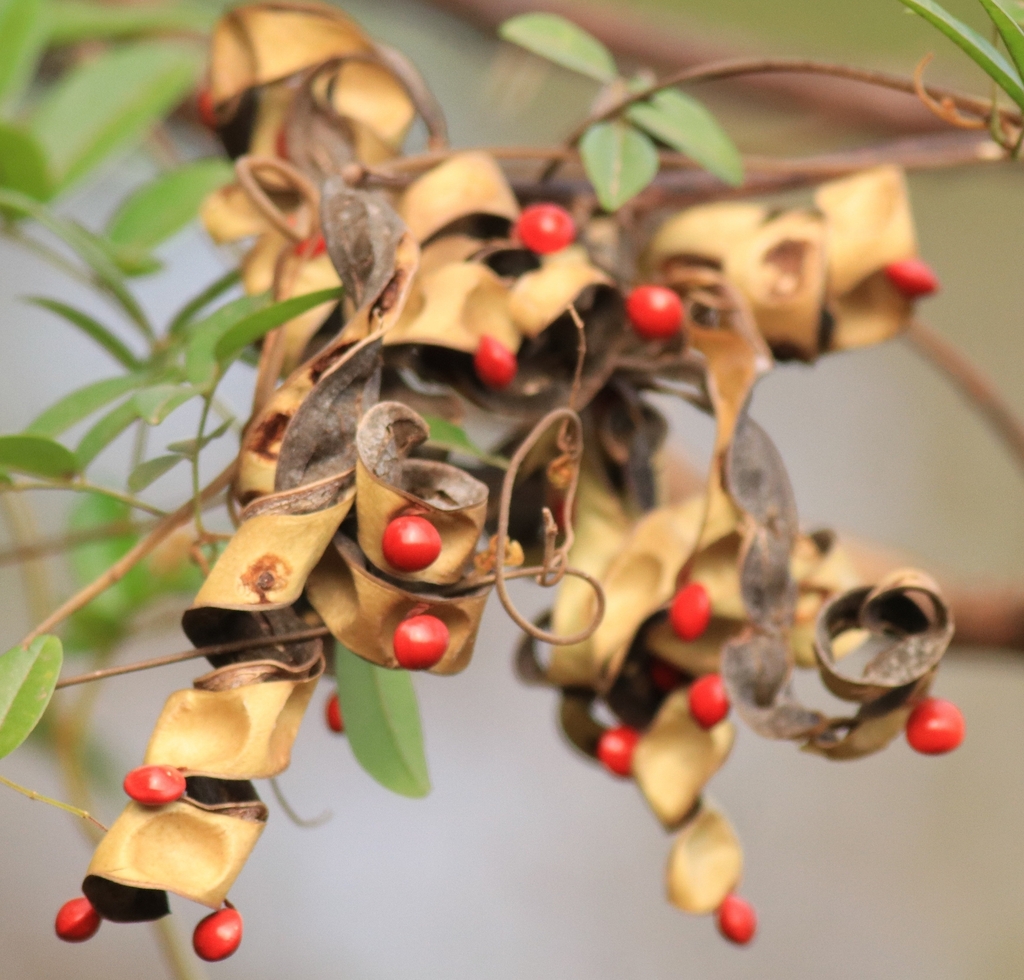
Adenanthera pavonina
- Origin
- Asia
- Part used
- Leaves, Seeds / fruit
- Tradition
- Traditional ethnobotany
Native to the tropical forests of South and Southeast Asia, Adenanthera pavonina — sometimes called "coral wood" or "coral seed" — is distinguished by its small, bright red seeds, gleaming like beads of precious wood. In Indian and Southeast Asian folk traditions, leaves and seeds found a modest place in uses related to pain and inflammation.
Traditional uses
Leaf decoction for the joints
The leaves were traditionally prepared as a decoction or poultice to help with joint and muscle pain, particularly in rural India and Southeast Asia.
Local application on skin inflammation
A poultice of crushed leaves was applied locally to inflamed or irritated areas of skin, according to folk uses reported in several regions of Asia.
Crushed seeds for external use
The seeds, once crushed, were sometimes used in external preparations intended to relieve localized pain, though this use is less documented than that of the leaves.
Occasional traditional use against digestive troubles
Some folk traditions mention an occasional use of the leaves to help with mild digestive troubles, though this indication is not widely established.
What to know before use
Raw seeds are reputed to be toxic and must never be consumed without preparation or the advice of a qualified professional. Internal use, in any form, is discouraged without the supervision of an herbalist or a health professional trained in this plant. Strictly avoid in pregnant or breastfeeding women, as well as young children, due to a lack of safety data. If undergoing medication treatment, seek medical advice before any use, even external, due to potentially poorly documented interactions.
The detailed notebook
- Prepared as a paste or decoction
- Traditional duration of use
- Known contraindications
- Related species and their uses
Where to find it
Partner herbalists — available with the detailed notebook.
Sources
PFAF, PubMed, Wikipedia