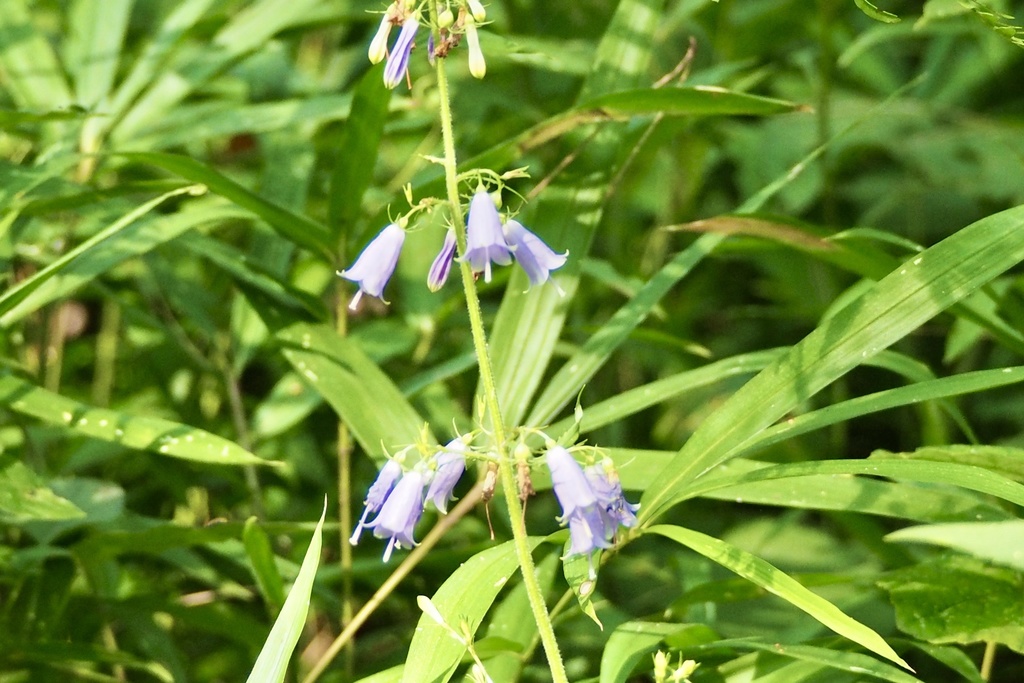
Adenophora triphylla
- Origin
- Asia
- Part used
- See detailed notebook
- Tradition
- Traditional ethnobotany
Beneath the light canopies of East Asia, Adenophora triphylla raises its slender stem topped with pale blue bells. For centuries, the fleshy root of this close cousin of the ladybell was harvested by herbalists in China, Korea, and Japan to soothe the throat and chest. Its folk name, often linked to "false ginseng" because of its root, attests to the place it held in traditional family pharmacopeia.
Traditional uses
Soothing dry cough
The root was traditionally used as a decoction to soothe irritated throats and calm persistent dry coughs, especially in late autumn and winter.
Support for the bronchial tract
In Chinese and Korean tradition, this plant was considered cooling for the lungs and used in cases of a sensation of dryness or heat in the chest.
A light, refreshing tonic
A traditional use of the root, sometimes cooked as a vegetable or in soup, is reported for its general cooling properties and mild tonic effect on the body.
Helping with mild feverish states
The root decoction was sometimes given during fevers accompanied by dry mouth, following a traditional logic of internal moistening and cooling.
What to know before use
The traditional uses reported here are historical and informational; they are in no way a substitute for medical advice. As with any dried root intended for decoction, rigorous botanical identification is essential, as related species can be confused with it. Use in pregnant or breastfeeding women, as well as young children, is not sufficiently documented and should be avoided as a precaution. If undergoing medication treatment, particularly for chronic respiratory conditions, seek advice from a health professional before any use.
The detailed notebook
- Prepared as a paste or decoction
- Traditional duration of use
- Known contraindications
- Related species and their uses
Where to find it
Partner herbalists — available with the detailed notebook.
Sources
PFAF, Wikipedia