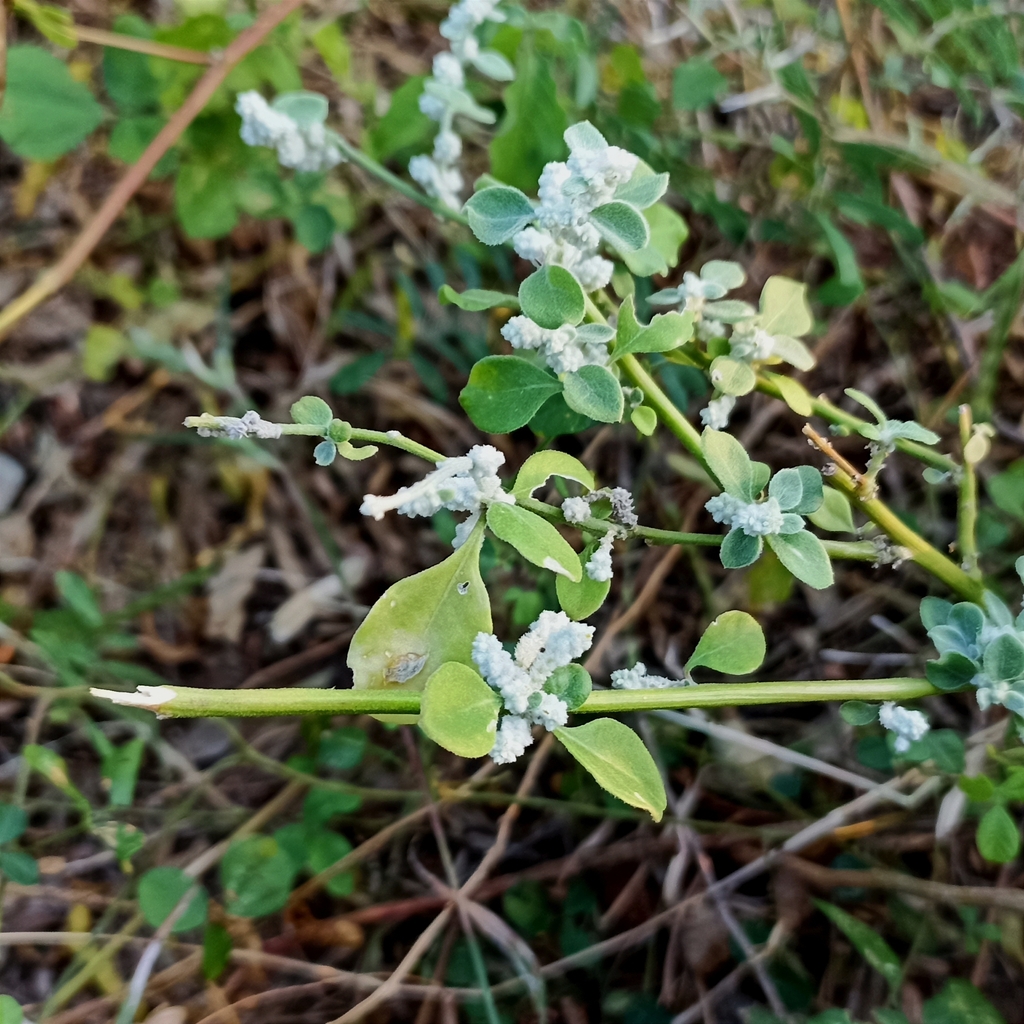
Aerva lanata
- Origin
- Africa
- Part used
- See detailed notebook
- Tradition
- Traditional ethnobotany
A modest woolly plant of dry ground and pathways, Aerva lanata has long been known to herbalists of Africa and tropical Asia for its uses related to the urinary tract and skin. Discreet beneath its silvery down, it holds an ancient place in folk pharmacopeia, often passed down from generation to generation rather than recorded in great treatises.
Traditional uses
Traditional support for the urinary tract
The whole plant, particularly the root, was traditionally used as a decoction to help with urinary comfort and promote elimination, in a folk use associated with kidney stones and urinary troubles.
A traditional use for the skin
Crushed leaves or a poultice were applied locally to certain irritations and skin conditions, according to practices reported in several African and Indian traditions.
A traditional digestive use
As a light decoction, the plant featured in folk preparations intended to help digestion and calm temporary abdominal discomfort.
A traditional use against fevers
Certain rural traditions credited it with cooling virtues used in cases of fever, as a decoction of the dried plant.
What to know before use
A traditional use insufficiently documented by modern research; caution recommends the advice of a health professional before any use. Not recommended for pregnant or breastfeeding women, for lack of sufficient safety data. To be avoided if undergoing treatment for kidney conditions, or in combination with diuretic medications, without medical advice. Do not use in young children without professional supervision.
The detailed notebook
- Prepared as a paste or decoction
- Traditional duration of use
- Known contraindications
- Related species and their uses
Where to find it
Partner herbalists — available with the detailed notebook.
Sources
PFAF