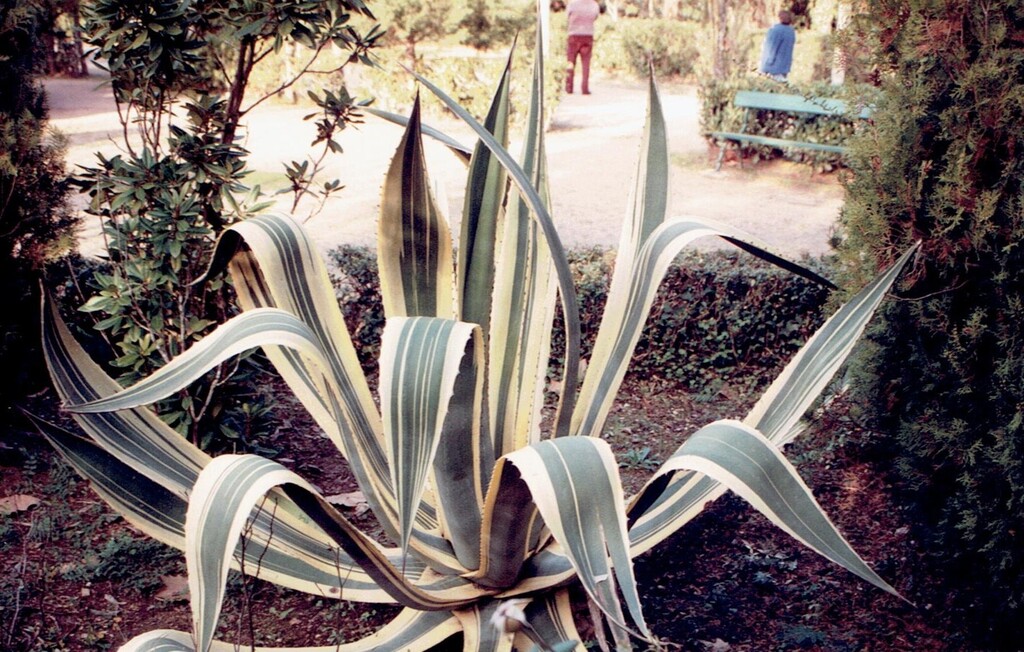
Agave americana
- Origin
- North America
- Part used
- See detailed notebook
- Tradition
- Traditional ethnobotany
Native to the arid lands of Mexico and the southern United States, Agave americana has accompanied Native American peoples for centuries, as a food, fiber, and medicinal plant all at once. Its spiny rosette shape, capable of living for decades before flowering just once, made it a symbol of patience and resourcefulness in the cultures of the New World. The sap of its fleshy leaves holds a special place in the continent's traditional herbalist notebooks.
Traditional uses
Traditional support for the urinary tract
The fresh leaf sap was traditionally used in Central America and Mexico as a gentle diuretic, thought to promote urinary elimination.
Traditional use as a mild laxative
In folk use, agave sap was sometimes taken diluted for its laxative properties, particularly during occasional digestive trouble.
Local application on the skin
The sap was applied locally as a poultice to irritated skin or minor injuries, according to Mexican rural folk uses.
A fiber plant with craft uses
Beyond healing, agave's fibrous leaves traditionally served to make cordage, textiles, and natural needles, a use inseparable from its ethnobotanical history.
Before you use it
Contact with fresh sap can cause significant skin irritation, even contact dermatitis in sensitive people. Ingesting unprepared or excessive sap is discouraged because of the irritant saponins present in the plant. To be avoided in pregnant or breastfeeding women, as well as young children, for lack of sufficient safety data. Do not use internally without the advice of a health professional, particularly if undergoing medical treatment.
The detailed notebook
- Prepared as a paste or decoction
- Traditional duration of use
- Known contraindications
- Related species and their uses
Where to find it
Partner herbalists — available with the detailed notebook.
Sources
PFAF, Wikipedia