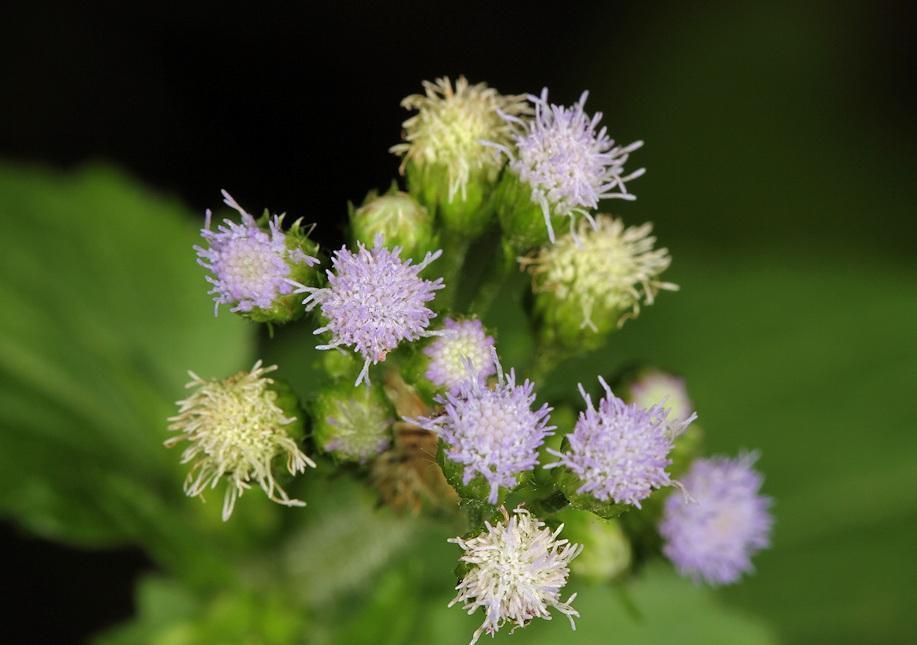
Ageratum conyzoides
- Origin
- South America
- Part used
- See detailed notebook
- Tradition
- Traditional ethnobotany
Native to the warm lowlands of South America, Ageratum conyzoides spread over the centuries to nearly every continent, where it was adopted by many popular traditions. A modest herb with bluish or mauve flowers, it holds a discreet but constant place in the herbalist notebooks of several tropical cultures.
Traditional uses
Traditional care for minor wounds
The fresh sap of crushed leaves was applied locally to cuts, scrapes, and minor burns in several traditions of South America and West Africa.
Traditional use against digestive troubles
An infusion of the aerial parts was sometimes traditionally drunk to soothe stomach aches and mild digestive disorders.
A popular remedy against fever
In certain popular tropical pharmacopoeias, the whole plant was used as a decoction to accompany feverish states and diffuse pain.
Traditional use for the respiratory tract
The leaves were also used by inhalation or infusion to relieve colds and mild congestion, according to usages reported in Africa and Southeast Asia.
What to know before use
The plant contains pyrrolizidine alkaloids, compounds potentially toxic to the liver with prolonged or repeated use. Internal use is discouraged for pregnant or breastfeeding women, as well as for young children. Do not exceed occasional, short-term use; avoid any prolonged course. Be sure to consult a healthcare professional or a qualified herbalist before any internal use, particularly if undergoing medication treatment.
The detailed notebook
- Prepared as a paste or decoction
- Traditional duration of use
- Known contraindications
- Related species and their uses
Where to find it
Partner herbalists — available with the detailed notebook.
Sources
PFAF