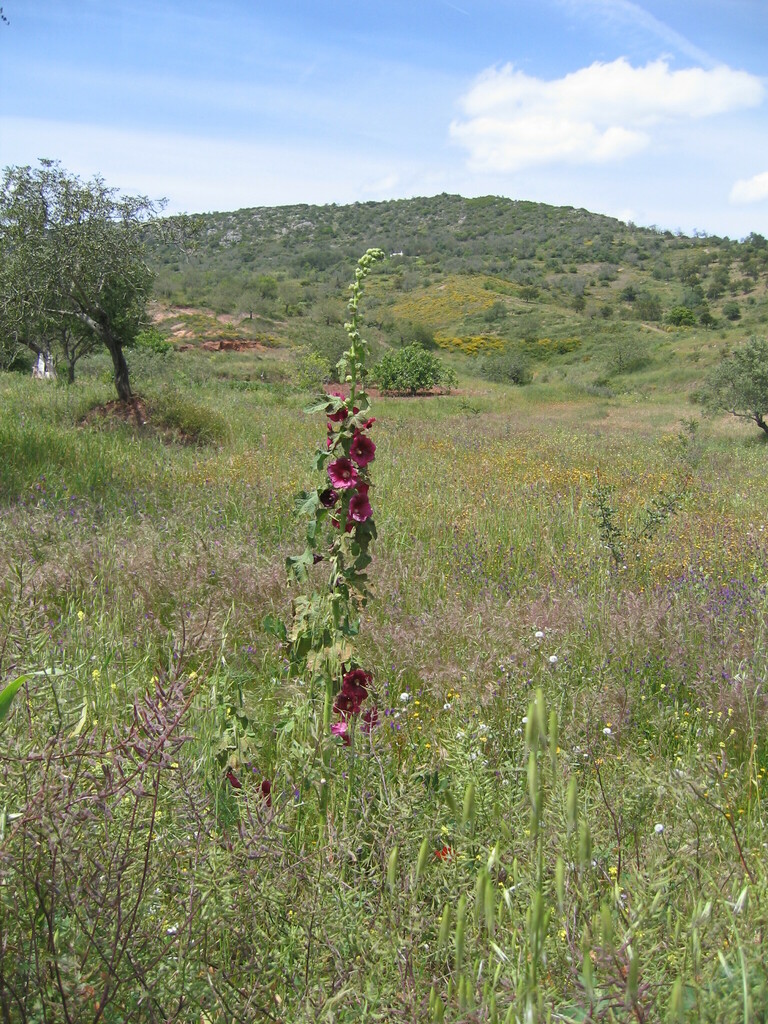
Alcea rosea
- Origin
- Asia
- Part used
- See detailed notebook
- Tradition
- Traditional ethnobotany
The garden hollyhock, tall and proud among low walls and enclosures, has adorned the countryside for centuries. Native to Asia, it was brought to Europe where it found a place both in ornamental gardens and in herbalists' notebooks, alongside its cousin the marshmallow, with which it shares certain soothing virtues. It was cultivated as much for its beauty as for its flowers and leaves, used traditionally for soothing purposes.
Traditional uses
Soothing the respiratory tract
Hollyhock flowers were traditionally infused to soothe throat irritation and calm dry coughing, much like the closely related marshmallow.
Soothing digestive mucous membranes
Rich in mucilage, the plant was used as an infusion to soothe mild inflammation of the oral and digestive mucous membranes.
Traditional care for irritated skin
As a compress or poultice, the flowers and leaves were used to calm inflamed skin, minor irritation, and chapping.
A gentle evening tea
Its light flavor and mucilaginous character made it a comfort tea, gladly taken in the evening for its gentle, soothing effect.
What to know before use
Avoid in cases of known allergy to plants of the Malvaceae family. Mucilage can slow the absorption of certain medications taken at the same time; space doses a few hours apart as a precaution. For pregnant or breastfeeding women and young children, seek the advice of a health professional before any regular use. Do not confuse with ornamental varieties treated with plant-protection products not intended for consumption.
The detailed notebook
- Prepared as a paste or decoction
- Traditional duration of use
- Known contraindications
- Related species and their uses
Where to find it
Partner herbalists — available with the detailed notebook.
Sources
PFAF, Wikipedia