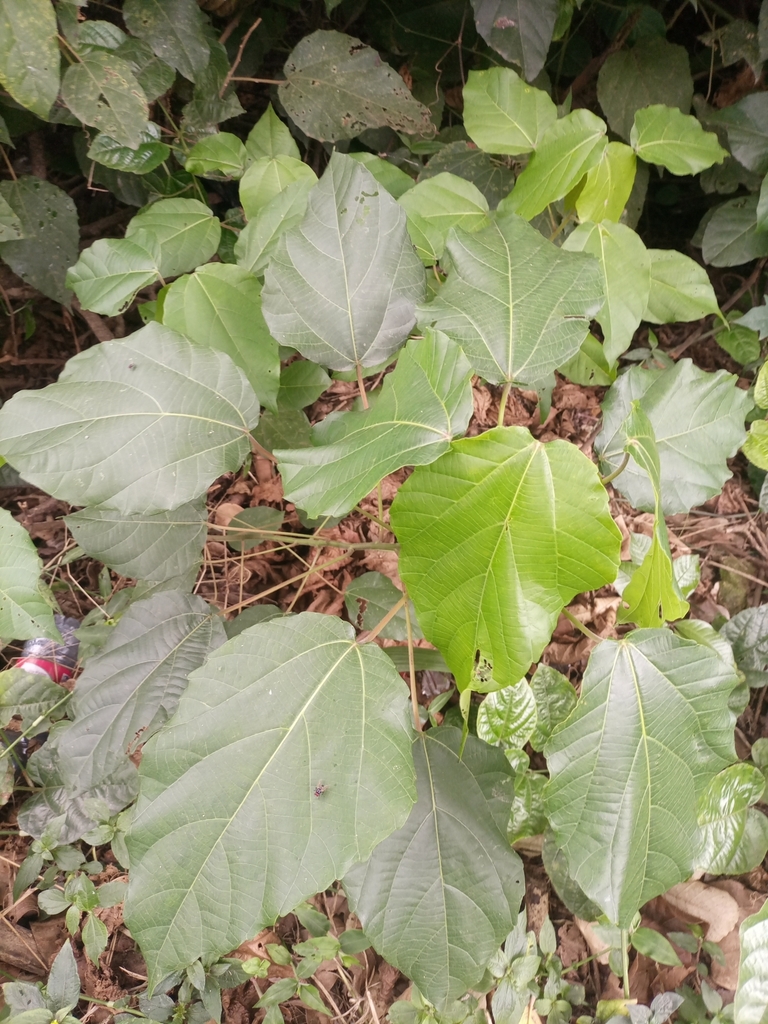
Alchornea cordifolia
- Origin
- Africa
- Part used
- See detailed notebook
- Tradition
- Traditional ethnobotany
A shrub of the wetlands and riverbanks of tropical Africa, Alchornea cordifolia, sometimes called the "ivory tree" or "healer" in certain local traditions, has held a prized place in African pharmacopeia for generations. Its broad, heart-shaped leaves and its bark have long been used by traditional practitioners for many everyday ailments.
Traditional uses
Digestive and intestinal troubles
The leaves and bark were traditionally used as a decoction to soothe digestive troubles, including diarrhea and abdominal pain, in many regions of sub-Saharan Africa.
Joint and rheumatic pain
In traditional medicine, leaf-based preparations were applied or consumed to relieve joint pain and inflammatory conditions.
Care for wounds and skin conditions
The sap and crushed leaves were commonly applied externally to wounds, injuries, and various skin conditions to promote their healing.
Support for the genito-urinary sphere
Certain traditions report the use of this plant to help with gynecological or urinary troubles, particularly as baths or decoctions, although these uses remain little standardized.
What to know before use
A traditional use documented mainly for external application or diluted preparations; prolonged or concentrated internal consumption is not recommended without the advice of a health professional. Not recommended during pregnancy and breastfeeding, as certain traditions report uses linked to the reproductive sphere whose effects are not well controlled. Do not give to young children without medical advice, as the composition and possible interactions are insufficiently documented. Avoid any self-medication if undergoing medication treatment, particularly for chronic conditions, due to poorly understood potential interactions.
The detailed notebook
- Prepared as a paste or decoction
- Traditional duration of use
- Known contraindications
- Related species and their uses
Where to find it
Partner herbalists — available with the detailed notebook.
Sources
PFAF