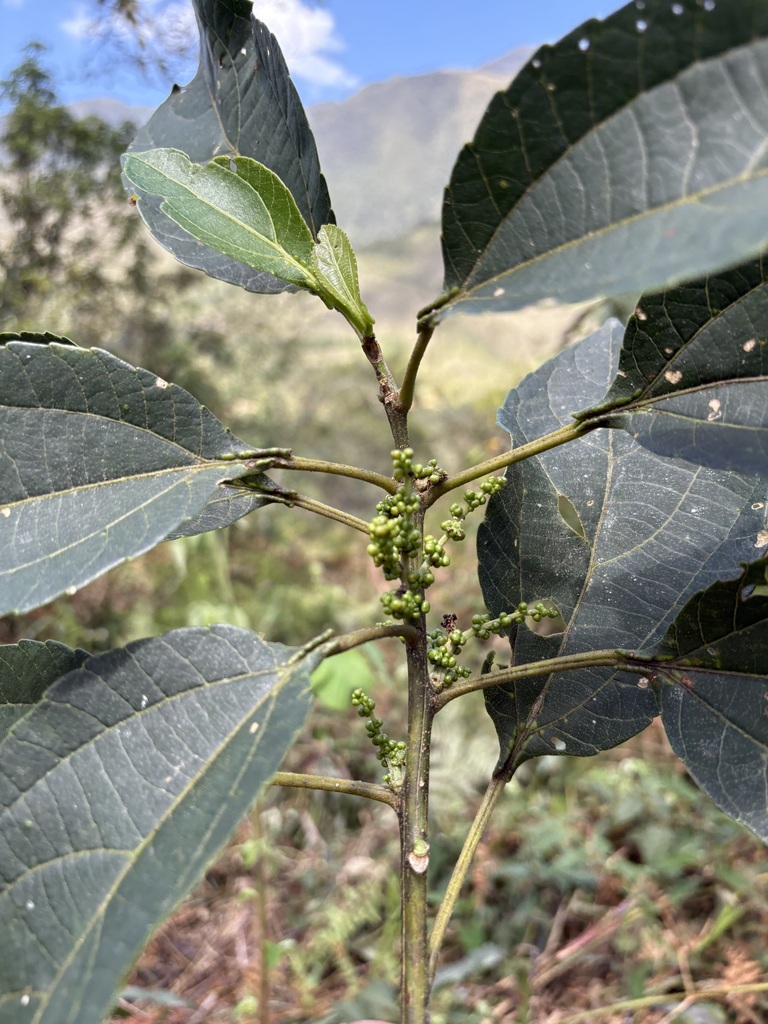
Alchornea glandulosa
- Origin
- South America
- Part used
- See detailed notebook
- Tradition
- Traditional ethnobotany
In the forests of South America, Alchornea glandulosa has long been known to traditional healers as “tapiá” or “boldo-do-mato” in certain regions of Brazil. Its bark and leaves were reserved for preparations intended to relieve bodily pain and inflammation, passed down from generation to generation within popular knowledge.
Traditional uses
Relief of joint pain
The bark was traditionally used as a decoction to soothe joint and muscle pain, particularly among rural populations of southern Brazil.
A popular anti-inflammatory use
The leaves were used in local preparations to calm various inflammations, a practice reported in the popular pharmacopoeia of the Amazon and Atlantic Forest regions.
Traditional digestive support
Like other plants of the same regional family, a leaf infusion was sometimes consumed to accompany difficult digestion.
Application on irritated skin
Poultices made from fresh leaves were applied locally to the skin for irritation or minor wounds, according to local oral tradition.
What to know before use
Traditional use is poorly documented scientifically outside its native range: caution is warranted regarding dosages and duration of use. Not recommended for pregnant or breastfeeding women, due to insufficient safety data. Do not use in children without a qualified healthcare professional's advice. If undergoing medication treatment, seek a healthcare professional's advice before any use, as interactions cannot be ruled out.
The detailed notebook
- Prepared as a paste or decoction
- Traditional duration of use
- Known contraindications
- Related species and their uses
Where to find it
Partner herbalists — available with the detailed notebook.
Sources
PFAF, Wikipedia