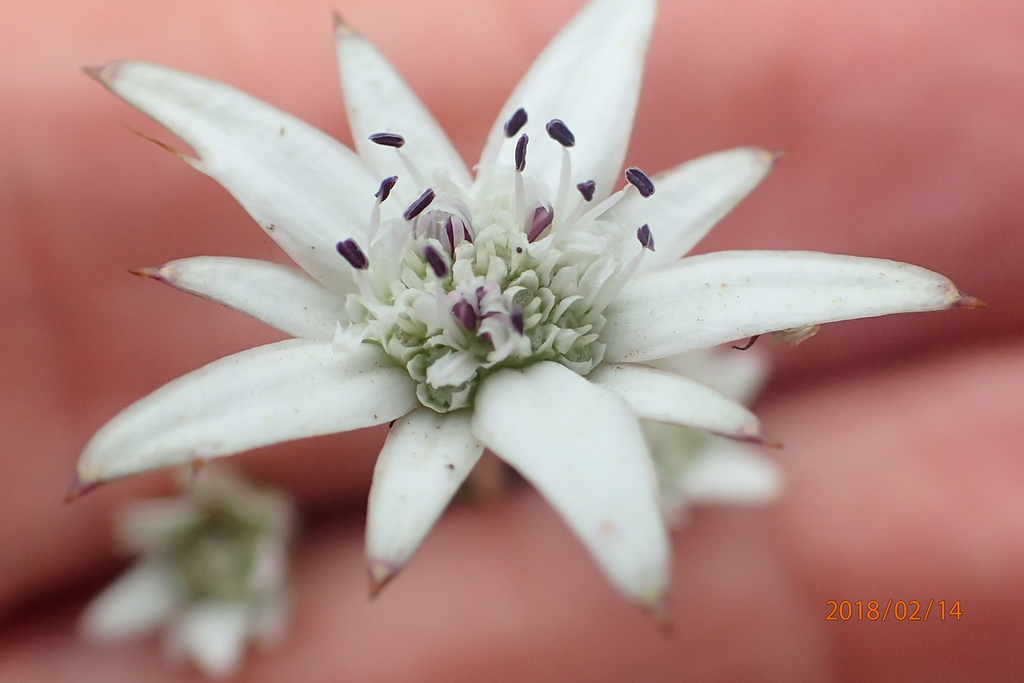
Alepidea peduncularis
- Origin
- Africa
- Part used
- See detailed notebook
- Tradition
- Traditional ethnobotany
Alepidea peduncularis, known in Southern African traditions as iqwili, holds a respected place in Zulu and Sotho pharmacopeia. The roots of this highland grassland plant were carried as an amulet as much as prepared as a remedy, blending symbolic protection and therapeutic use. It remains today one of the most sought-after and traded species in South African traditional herbal markets.
Traditional uses
Cough and respiratory ailments
The dried root was traditionally smoked, inhaled, or prepared as a decoction to soothe coughing, colds, and various respiratory troubles. This use is among the oldest and most consistently reported in South African traditional medicine.
Bodily pain and feverish states
As a decoction, the root was used to relieve diffuse pain, headaches, and help with episodes of fever.
Digestive troubles and colic
The plant featured in preparations intended to calm abdominal pain and certain digestive troubles, particularly in children, according to locally reported uses.
A traditional protective amulet
Beyond its internal use, the dried root was worn as a necklace or kept in the home as a protective charm against evil spirits and the evil eye, according to Zulu beliefs.
What to know before use
A plant with a traditional use that is little documented scientifically: seek the advice of a health professional before any internal use. Avoid in pregnant or breastfeeding women, for lack of sufficient safety data. Do not give to young children without the supervision of a practitioner experienced in traditional medicine. A species threatened by overharvesting in the wild: favor a cultivated or responsibly sourced origin when possible.
The detailed notebook
- Prepared as a paste or decoction
- Traditional duration of use
- Known contraindications
- Related species and their uses
Where to find it
Partner herbalists — available with the detailed notebook.
Sources
PFAF