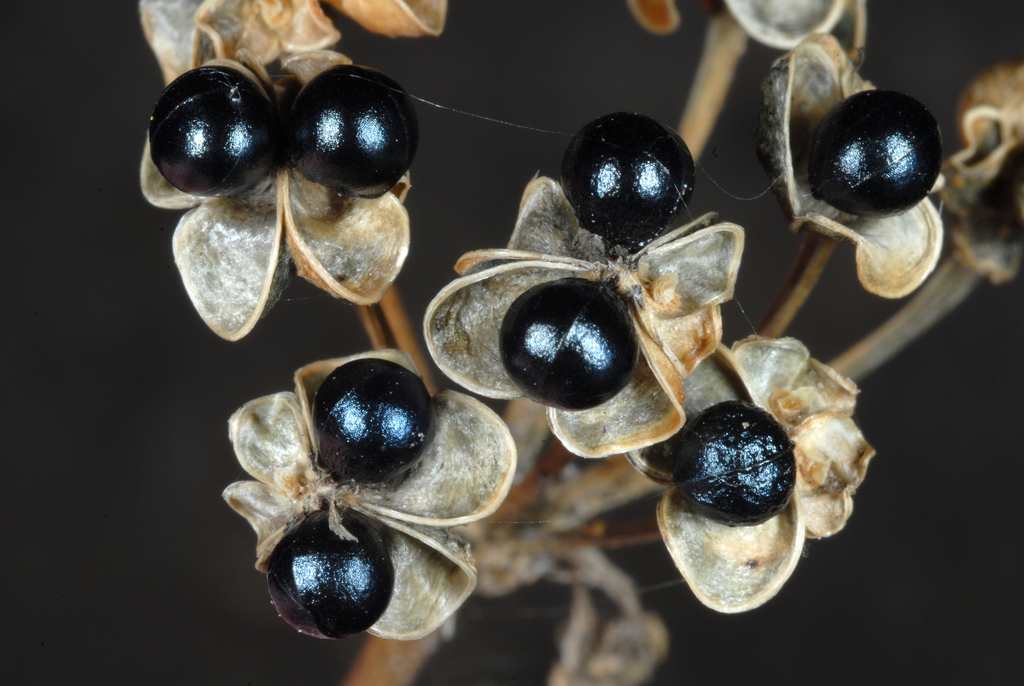
Allium tricoccum
- Origin
- North America
- Part used
- Root
- Tradition
- Traditional ethnobotany
Wild leek, which North American Indigenous nations knew and which settlers came to call "ramp," announced the woodland's awakening after winter. Gathered as soon as the weather turned, this wild cousin of garlic and leek held a place both as food and medicine in the traditions of the peoples of the eastern forests. Its strong scent, tender bulb, and broad leaves made it a spring food as much as a seasonal remedy.
Traditional uses
Support for spring digestion
The fresh root was traditionally eaten at winter's end to stimulate the appetite and aid digestion, in the manner of other alliums.
Soothing for the airways
Some Indigenous communities used the bulb as a warm preparation to help with colds and clear the chest, a use shared with common garlic.
A fortifying end-of-winter plant
Considered purifying after months of preserved food, wild leek was traditionally eaten raw or cooked as a general spring tonic.
External use for bites and minor wounds
The crushed bulb was sometimes applied locally in certain folk traditions, as a light poultice, to insect bites.
Before you use it
Wild harvesting must be extremely measured: wild leek grows slowly and the species is now threatened by overharvesting in many regions. As with garlic, large amounts can interact with anticoagulant or blood-thinning treatments. Avoid large amounts in pregnant or breastfeeding women, as a general precaution linked to alliums. If in doubt about identification (possible confusion with toxic woodland plants such as lily of the valley or autumn crocus before flowering), refrain from any harvesting.
The detailed notebook
- Prepared as a paste or decoction
- Traditional duration of use
- Known contraindications
- Related species and their uses
Where to find it
Partner herbalists — available with the detailed notebook.
Sources
Wikipedia