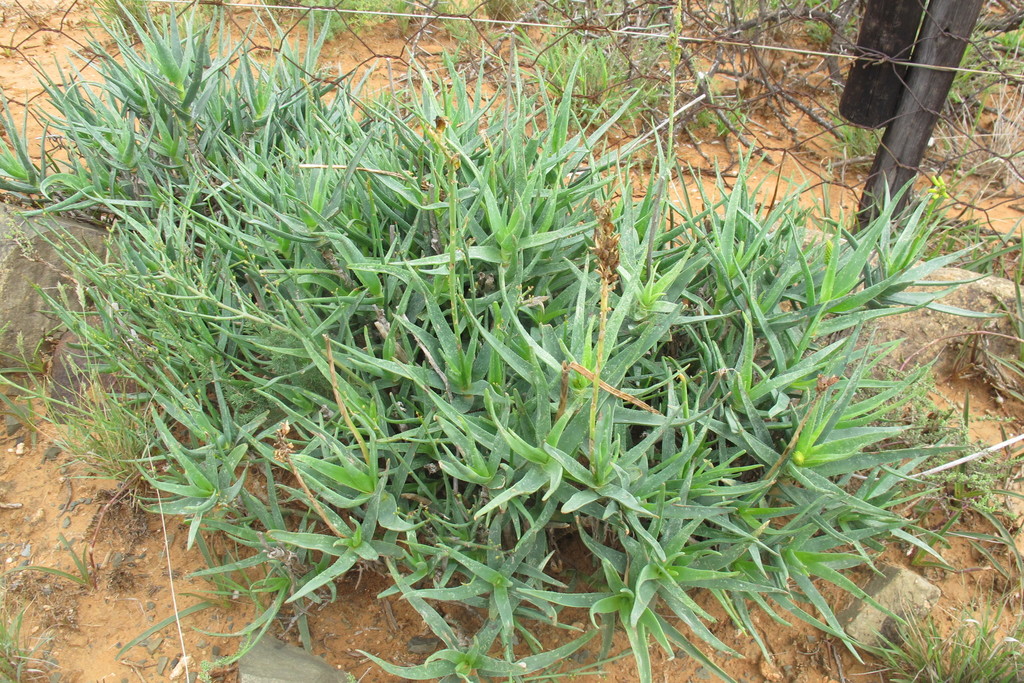
Aloe tenuior
- Origin
- Africa
- Part used
- See detailed notebook
- Tradition
- Traditional ethnobotany
Native to the hills and scrubby edges of Southern Africa, Aloe tenuior is distinguished by its slender stems and pale yellow or orange tubular flowers. Less famous than its cousins Aloe vera or Aloe ferox, it nonetheless holds a discreet place in South African traditional pharmacopeia, where the gel and bitter sap of the leaves were gathered with care.
Traditional uses
Application on irritated skin
The fresh gel extracted from the leaves was traditionally applied externally to soothe inflamed skin, minor superficial burns, or skin irritation.
Occasional use as a purgative
The bitter sap (latex) found beneath the leaf's outer layer was sometimes used, at a very low dose, as a traditional purgative in certain communities of Southern Africa.
Care for minor wounds
The gel is reported to have been used as a poultice to help soothe minor cuts or scrapes, in keeping with uses attributed to other Aloe species.
A local ceremonial use
Certain communities also credited it with a role in ritual or protective practices, though these uses are not documented in detail today.
What to know before use
The yellow latex found beneath the leaves' outer layer contains anthraquinone compounds that can cause severe digestive irritation; it must never be ingested without the advice of a qualified professional. Internal use strongly not recommended for pregnant or breastfeeding women, as well as young children. Avoid any prolonged contact of unpurified latex with mucous membranes or deep wounds. If undergoing medication treatment (particularly diuretics or heart treatments), seek the advice of a health professional before any internal use, due to possible interactions related to the purgative compounds.
The detailed notebook
- Prepared as a paste or decoction
- Traditional duration of use
- Known contraindications
- Related species and their uses
Where to find it
Partner herbalists — available with the detailed notebook.
Sources
PFAF