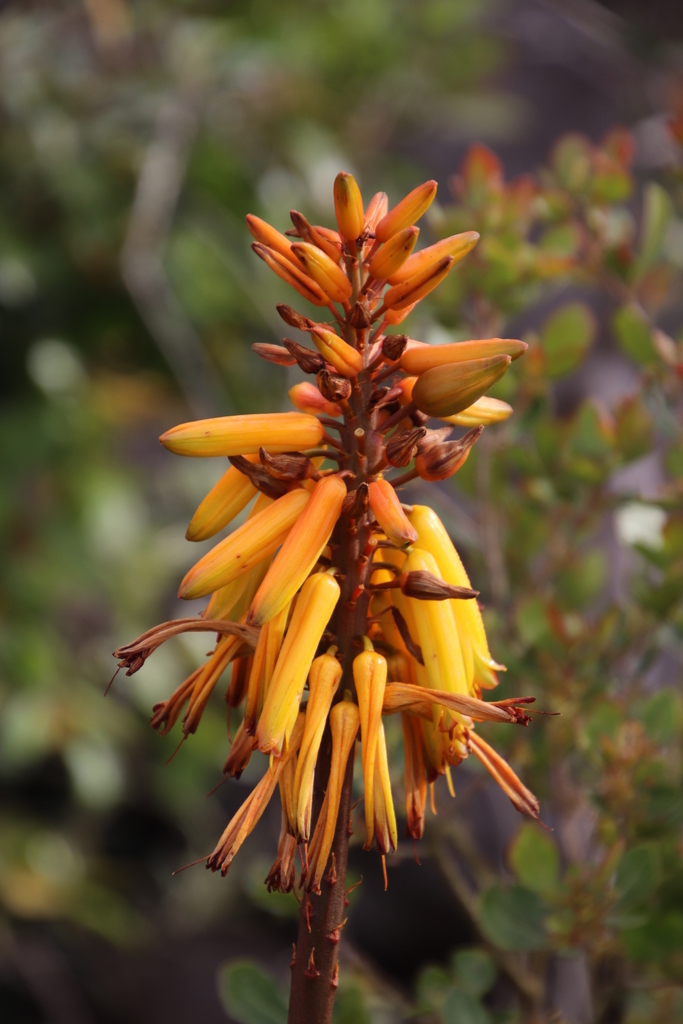
Aloiampelos commixta
- Origin
- Africa
- Part used
- Stem
- Tradition
- Traditional ethnobotany
On the rocky slopes and forest edges of Southern Africa, Aloiampelos commixta unfurls its long climbing stems, once observed by traditional herbalists of the Cape and neighboring regions. This succulent vine, related to the aloes, holds a discreet place in local folk uses, passed down more through observation than through learned writing.
Traditional uses
Application on skin irritation
The sap or pulp extracted from the stem was traditionally applied externally to minor lesions or skin irritation, in keeping with uses attributed to related aloes.
Care for minor cuts
Like other members of the genus Aloe, the fresh matter of the stem is said to have been used locally to soothe minor cuts or superficial scrapes.
Local use for livestock care
Certain rural communities report an empirical use of the plant for livestock, as an external application, although this use remains very little documented in the available literature.
What to know before use
Scientific and traditional data on this specific species remain limited; any use should remain cautious and be validated by a health professional or qualified herbalist. As with many aloes, the sap may contain irritating or purgative compounds; internal use is not recommended without supervision. Avoid any use in pregnant or breastfeeding women, as well as children, in the absence of sufficient safety data. Perform a preliminary skin test before any external application, as some people may be sensitive to aloe saps.
The detailed notebook
- Prepared as a paste or decoction
- Traditional duration of use
- Known contraindications
- Related species and their uses
Where to find it
Partner herbalists — available with the detailed notebook.
Sources
Wikipedia