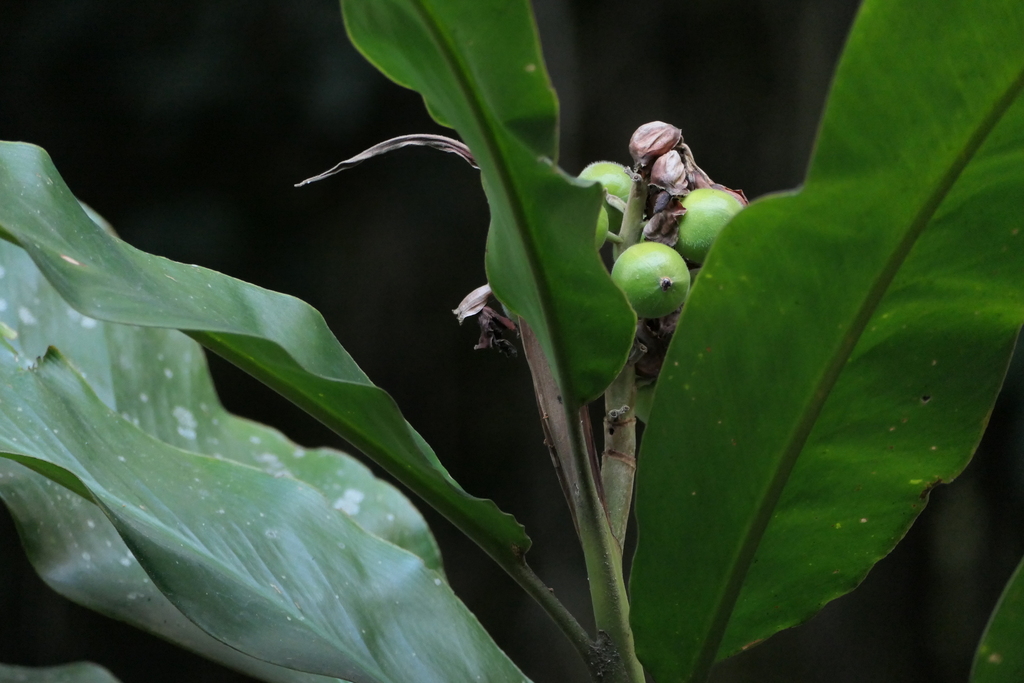
Alpinia malaccensis
- Origin
- Asia
- Part used
- See detailed notebook
- Tradition
- Traditional ethnobotany
A cousin of ginger and cardamom, Alpinia malaccensis grows in the damp undergrowth of South and Southeast Asia, where its fragrant rhizome and aromatic fruits were traditionally harvested by local healers. Long used in Indian and Malay folk pharmacopeia, this plant of the ginger family remains less known in the West today than its close culinary relatives.
Traditional uses
Digestive support
The rhizome was traditionally chewed or infused to relieve stomach heaviness and stimulate appetite, according to South Asian folk uses.
Comfort for the respiratory tract
Rhizome decoctions were used in certain traditions to help with episodes of coughing and congestion, in the manner of other Alpinia and ginger-family plants.
Traditional external use
The crushed rhizome or its infused oil were sometimes used as a local application to soothe certain superficial skin irritations, according to rural practices still observed today.
Traditional postpartum use
In certain regions, the rhizome was used in preparations intended for women after childbirth, a use confined to local traditional knowledge and poorly documented scientifically.
What to know before use
Use poorly documented by modern scientific research: caution and the advice of a health professional are recommended before any use. Not recommended without medical advice for pregnant or breastfeeding women, due to traditional uses touching on the female sphere. Avoid in young children, for lack of sufficient data on tolerance and dosage. As with other ginger-family plants, an interaction with certain treatments (anticoagulants, hypoglycemics) cannot be ruled out; seek advice if undergoing treatment.
The detailed notebook
- Prepared as a paste or decoction
- Traditional duration of use
- Known contraindications
- Related species and their uses
Where to find it
Partner herbalists — available with the detailed notebook.
Sources
PFAF