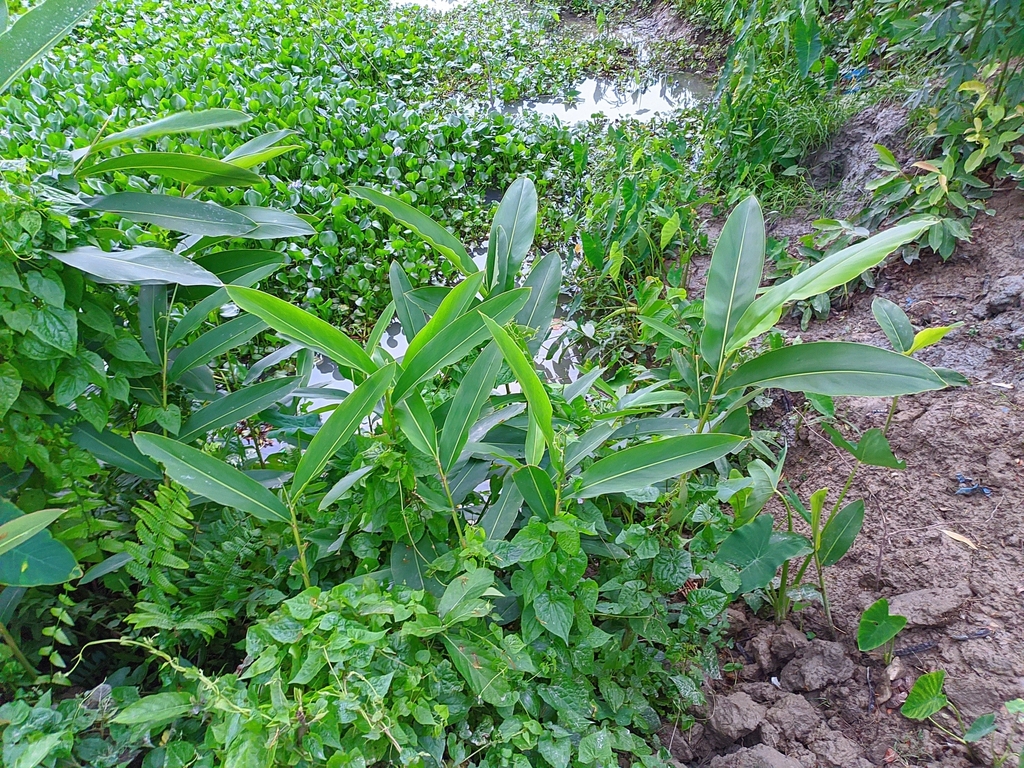
Alpinia nigra
- Origin
- Asia
- Part used
- Leaves, Root
- Tradition
- Traditional ethnobotany
In the damp forests of the Indian subcontinent and Southeast Asia, Alpinia nigra grows in the shade of large trees, among its ginger-family cousins. Traditional herbalists of these regions have long known its aromatic leaves and root, used in family remedies and traditional medicinal cooking.
Traditional uses
Digestive support
The root was traditionally chewed or infused to relieve digestive heaviness and stimulate appetite, in the manner of other alpinias and gingers.
Respiratory conditions
Decoctions of root or leaves were used in certain South Asian folk medicines to relieve coughing and flu-like states.
Joint and muscle pain
A poultice or leaf decoction was applied locally to relieve pain and stiffness, a use reported in several regional pharmacopeia.
Traditional remedy against fever
The root was used in folk preparations intended to lower fever, according to ethnobotanical uses recorded in northeastern India and Bangladesh.
What to know before use
Traditional use poorly documented scientifically: seek the advice of a health professional before any use, particularly if undergoing medication treatment. Not recommended for pregnant or breastfeeding women, for lack of sufficient safety data. Do not give to young children without medical advice. Avoid prolonged or high-dose use, as the plant has not been the subject of thorough toxicity studies.
The detailed notebook
- Prepared as a paste or decoction
- Traditional duration of use
- Known contraindications
- Related species and their uses
Where to find it
Partner herbalists — available with the detailed notebook.
Sources
PFAF, Wikipedia