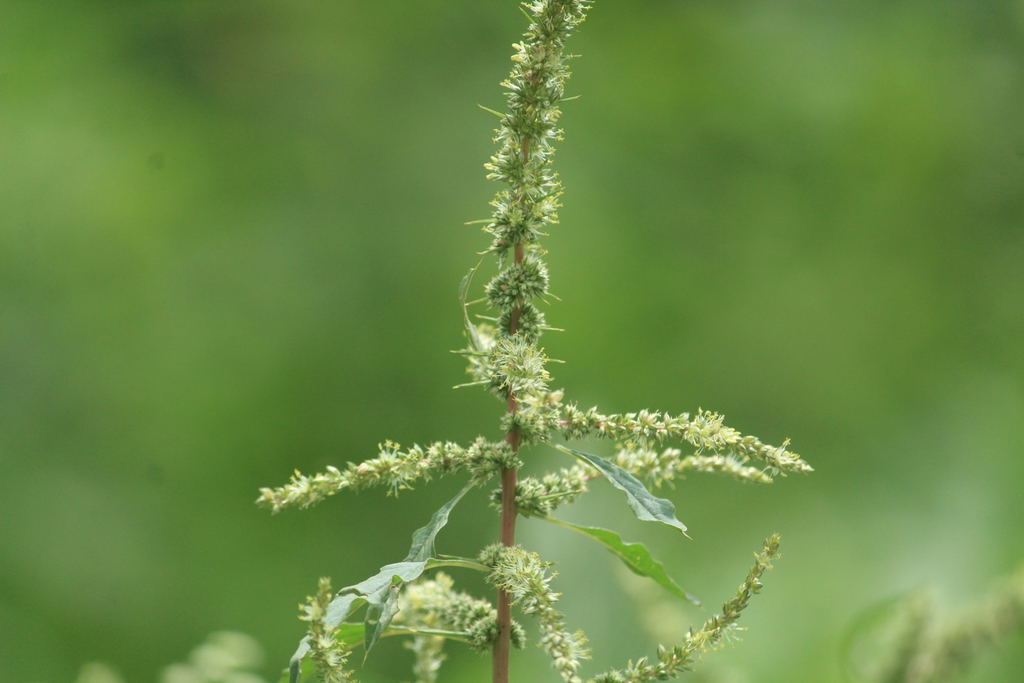
Amaranthus spinosus
- Origin
- Africa
- Part used
- See detailed notebook
- Tradition
- Traditional ethnobotany
In the African countryside, spiny amaranth grows readily along paths and fields, often regarded by some as a simple weed and by others as a precious resource. Ancient African herbalists gathered it for its nourishing leaves as much as for its soothing virtues on stomach troubles. A humble, hardy plant, it bears witness to this folk knowledge passed down from generation to generation.
Traditional uses
Soothing digestive troubles
The leaves and roots were traditionally used as a decoction to relieve stomach aches, diarrhea, and intestinal discomfort.
Traditional support for the female cycle
In certain traditional African and Asian pharmacopeia, the root was used to help with menstrual troubles, a use that calls for particular caution.
Care for wounds and irritation
A paste of fresh leaves, applied as a compress, was traditionally used to soothe minor wounds, bites, and skin irritation.
A traditional use against swelling
Crushed leaves were sometimes used as a poultice to soothe swollen or painful areas, according to folk traditions.
What to know before use
Not recommended during pregnancy due to traditional uses linked to the female cycle, whose safety is not established. Internal use, particularly of the root, should remain occasional and supervised by a health professional or experienced herbalist. Avoid in young children and if undergoing medication treatment, for lack of sufficient data on interactions. The spiny stems require careful handling when harvesting to avoid injury.
The detailed notebook
- Prepared as a paste or decoction
- Traditional duration of use
- Known contraindications
- Related species and their uses
Where to find it
Partner herbalists — available with the detailed notebook.
Sources
PFAF, PubMed