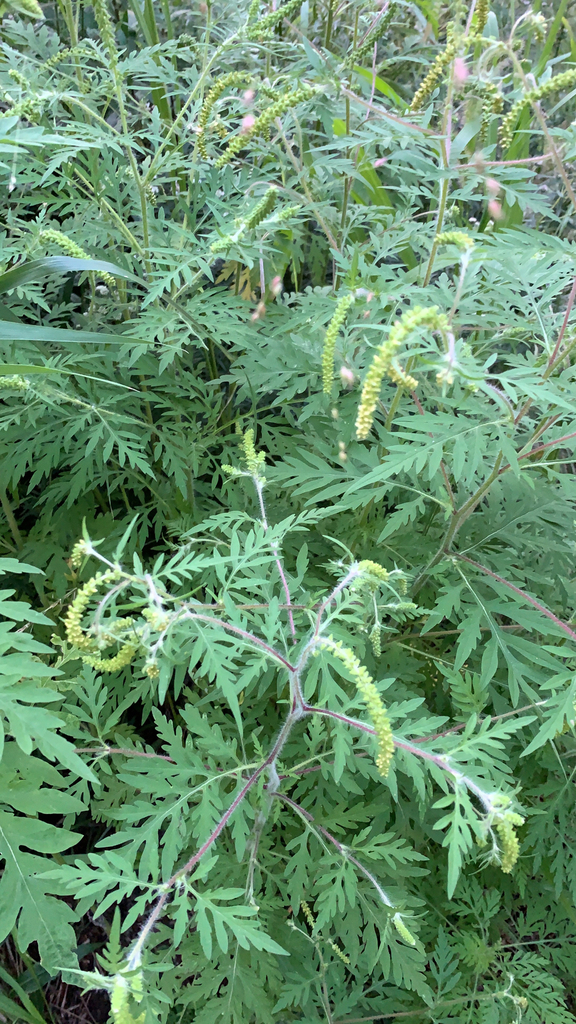
Ambrosia artemisiifolia
- Origin
- North America
- Part used
- Root
- Tradition
- Traditional ethnobotany
Common ragweed, an unassuming plant of vacant lots and wasteland, was known to North American tribes long before it crossed the Atlantic. The old herbalists regarded it more as an occasional medicinal plant than an everyday remedy, reserved for precise uses of the root.
Traditional uses
Easing digestive trouble
The root was traditionally used by certain Native American communities as a mild decoction to calm digestive discomfort and nausea.
Traditional fever remedy
Some traditions report the use of the root as a decoction to help with feverish states, in the manner of other bitter plants of the continent.
Local application on irritation
The crushed root or a concentrated decoction reportedly served externally to relieve certain skin irritation, particularly that linked to bites or mild skin conditions.
Occasional traditional gynecological use
A few ethnobotanical sources mention a traditional use of the root related to menstrual troubles, though these practices are not precisely documented today.
Before you use it
Ragweed pollen is a major and particularly potent allergen; handling the fresh plant is discouraged for people prone to allergic rhinitis or asthma. The plant is classified as an invasive species and regulated in many regions; growing or deliberately spreading it should be avoided. Internal use, poorly documented and potentially irritating, should only be considered after the advice of a health professional or an experienced herbalist. Discouraged for pregnant or breastfeeding women, as well as children, in the absence of sufficient safety data.
The detailed notebook
- Prepared as a paste or decoction
- Traditional duration of use
- Known contraindications
- Related species and their uses
Where to find it
Partner herbalists — available with the detailed notebook.
Sources
PFAF, Wikipedia