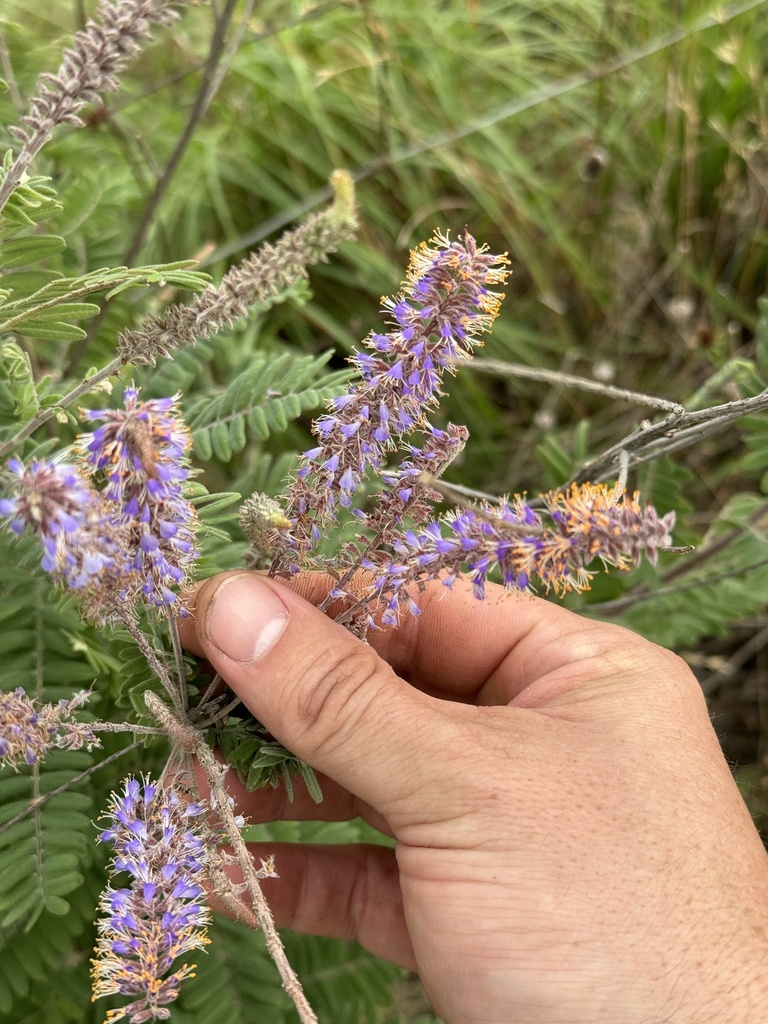
Amorpha canescens
- Origin
- North America
- Part used
- See detailed notebook
- Tradition
- Traditional ethnobotany
On the great prairies of North America, Amorpha canescens, which settlers sometimes called "Nebraska tea" or "buffalo bellows plant," accompanied the Plains peoples in their everyday uses. A shrub with silvery foliage and purple spikes, it held a quiet but recognized place in the traditional Native American pharmacopoeia, notably among the Lakota, Pawnee, and Omaha nations.
Traditional uses
A leaf infusion for the stomach
The dried leaves were traditionally infused and drunk to ease mild digestive trouble, in the manner of a common tea among several Plains nations.
Application on wounds and stings
The crushed leaves or a poultice were applied to insect stings and minor wounds, according to uses reported among the Native American peoples of the prairies.
Traditional fumigation
The dried stems and leaves were sometimes burned as a fumigation during certain ritual uses or to purify the air of a space, a practice documented among certain Native American communities.
Care of livestock and horses
Certain tribes used the plant in an external preparation to treat animals, a practice linked to its other common name, "buffalo root."
Before you use it
A traditional use poorly documented by modern research: caution is called for, particularly for any prolonged internal use. Avoid in pregnant or breastfeeding women, for lack of sufficient safety data. Do not use in children without the advice of a health professional. Seek the advice of a professional before any use, particularly if undergoing medical treatment.
The detailed notebook
- Prepared as a paste or decoction
- Traditional duration of use
- Known contraindications
- Related species and their uses
Where to find it
Partner herbalists — available with the detailed notebook.
Sources
PFAF