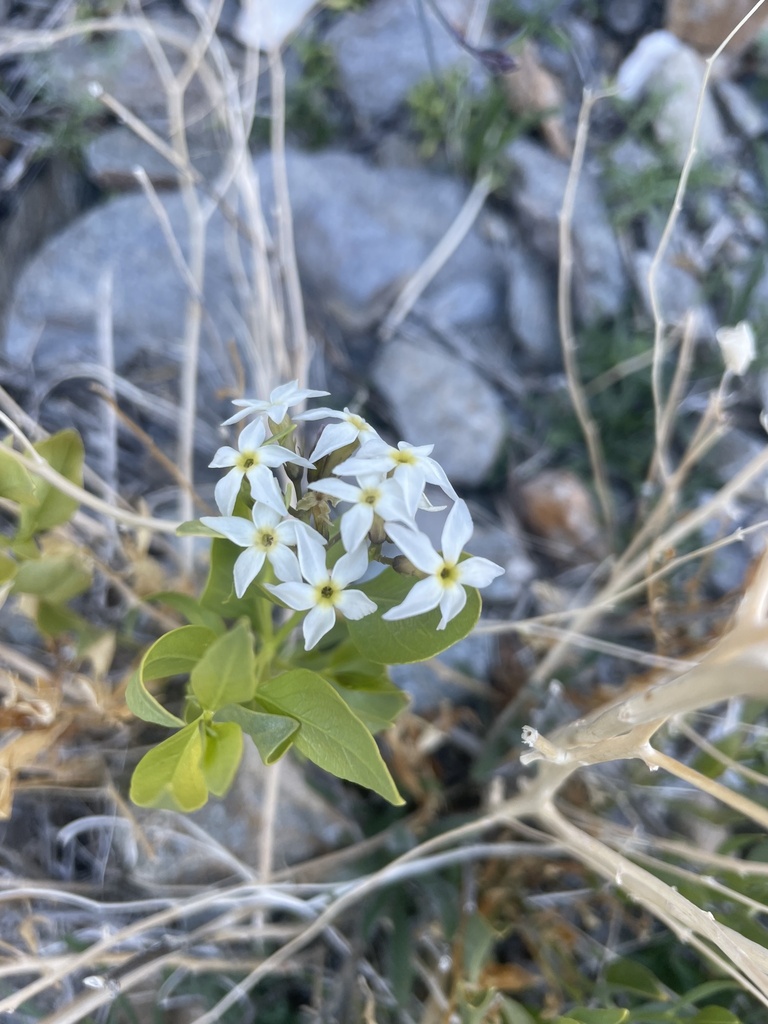
Amsonia tomentosa
- Origin
- North America
- Part used
- Root
- Tradition
- Traditional ethnobotany
An unassuming inhabitant of the arid lands of the American Southwest, Amsonia tomentosa belongs to that group of desert plants whose knowledge has been passed down more through the oral tradition of certain Indigenous peoples than through learned writings. Its presence in herbalist notebooks remains rare and fragmentary, which calls for a cautious reading of its reported uses.
Traditional uses
Traditional use for digestive trouble
The root was reportedly used occasionally by certain Indigenous groups to ease minor digestive upset, according to scattered ethnobotanical accounts.
External application on the skin
Preparations made from crushed root were reportedly used externally, as a local application, in certain regional traditions, though precise details are poorly documented.
A plant linked to local practices
Like several desert Amsonia species, this plant reportedly held a modest place in local traditional practices, passed down more than written.
Before you use it
The traditional uses of this plant are very poorly documented scientifically; the greatest caution is recommended before any use. The genus Amsonia contains alkaloids whose effects and potential toxicity have not been sufficiently studied. Do not use in pregnant or breastfeeding women, or in children, in the absence of safety data. The advice of a health professional or an experienced herbalist is essential before any internal use.
The detailed notebook
- Prepared as a paste or decoction
- Traditional duration of use
- Known contraindications
- Related species and their uses
Where to find it
Partner herbalists — available with the detailed notebook.
Sources
PFAF, Wikipedia