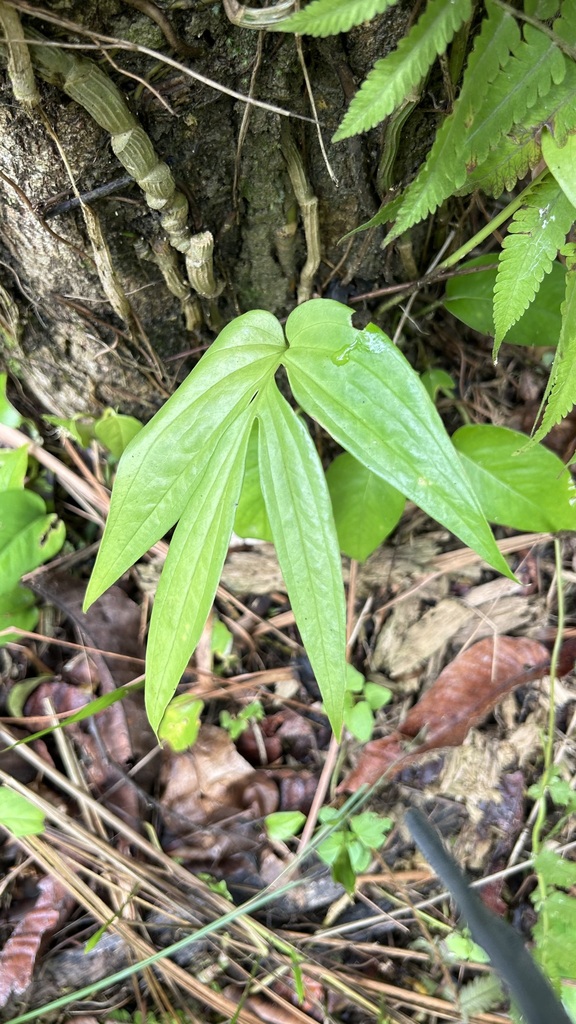
Amydrium zippelianum
- Origin
- Asia
- Part used
- See detailed notebook
- Tradition
- Traditional ethnobotany
An unassuming vine of the damp undergrowth of Southeast Asia, Amydrium zippelianum clings to the trunks of tropical forests where it climbs patiently toward the light. Little known outside its native range, this aroid remains above all a plant of shade and mystery, mentioned more often in the notebooks of botanist-explorers than in classic herbal treatises.
Traditional uses
Occasional use in folk medicine
In certain regions of its native range, the sap or leaves are said to have been used in a very local and informal way, though these practices have not been reliably recorded or widely transmitted.
A plant primarily ornamental and botanical
Amydrium zippelianum is today known mainly among collectors of tropical plants and botanists for its foliage and climbing habit, far more than for any documented traditional use.
No established written tradition
Unlike other members of the aroid family, no solidly documented tradition of internal use has been found for this particular species in accessible historical sources.
What to know before use
Many aroids, the family to which Amydrium zippelianum belongs, contain calcium oxalate crystals that irritate the skin and mucous membranes: avoid any prolonged contact with the sap. In the absence of reliable documentation on possible internal toxicity, no ingestion can be recommended without the advice of a qualified professional. Do not use in pregnant or breastfeeding women, or in children, for lack of sufficient data. Handle with gloves when cutting or maintaining the plant, as a precaution.
The detailed notebook
- Prepared as a paste or decoction
- Traditional duration of use
- Known contraindications
- Related species and their uses
Where to find it
Partner herbalists — available with the detailed notebook.
Sources
PFAF