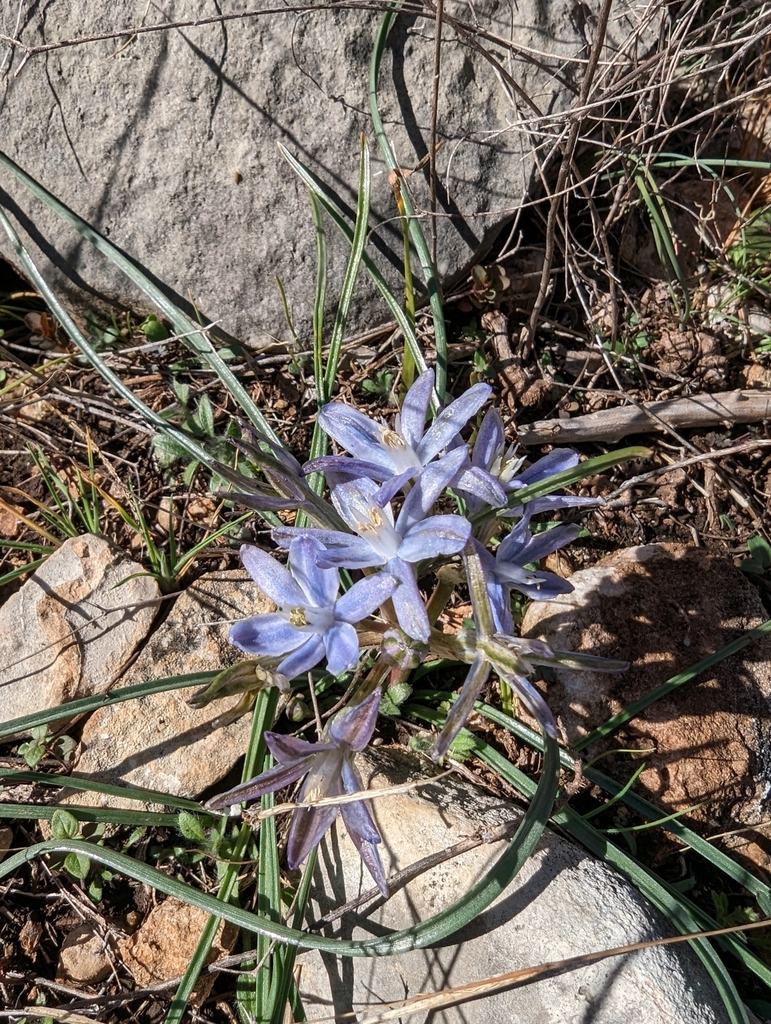
Androstephium caeruleum
- Origin
- North America
- Part used
- See detailed notebook
- Tradition
- Traditional ethnobotany
An unassuming member of the lily family from the great North American plains, Androstephium caeruleum has left only rare traces in herbalist notebooks. The Indigenous peoples of the plains knew it mainly as a small wild bulb gathered here and there in the prairies, rather than as a codified remedy. Its traditional use therefore remains fragmentary and poorly documented, which calls for the greatest restraint regarding its supposed properties.
Traditional uses
Bulb eaten occasionally
Some ethnobotanical sources mention occasional consumption of the bulb by Native American populations of the plains, in the manner of other wild bulbs of the same family. This use nonetheless remains anecdotal and poorly detailed in the available sources.
A plant little documented beyond local folklore
The plant appears only marginally in inventories of prairie plants, with no clearly established therapeutic use that has passed down through generations of herbalists.
No clear medicinal tradition
Unlike other lilies of the plains, Androstephium caeruleum does not appear to have been the subject of a well-established traditional medicinal use, which should encourage restraint regarding any present-day use.
Before you use it
The information available on this plant is too fragmentary to guarantee its safety; any consumption is discouraged without the advice of a botanical specialist or a health professional. The bulb, like that of many lilies, can be confused with toxic related species; certain identification by a knowledgeable person is essential before any handling. Avoid any use in pregnant or breastfeeding women, as well as children, in the absence of safety data. Do not use this plant for therapeutic purposes: its documented traditional use is too limited to draw any recommendation from it.
The detailed notebook
- Prepared as a paste or decoction
- Traditional duration of use
- Known contraindications
- Related species and their uses
Where to find it
Partner herbalists — available with the detailed notebook.
Sources
PFAF