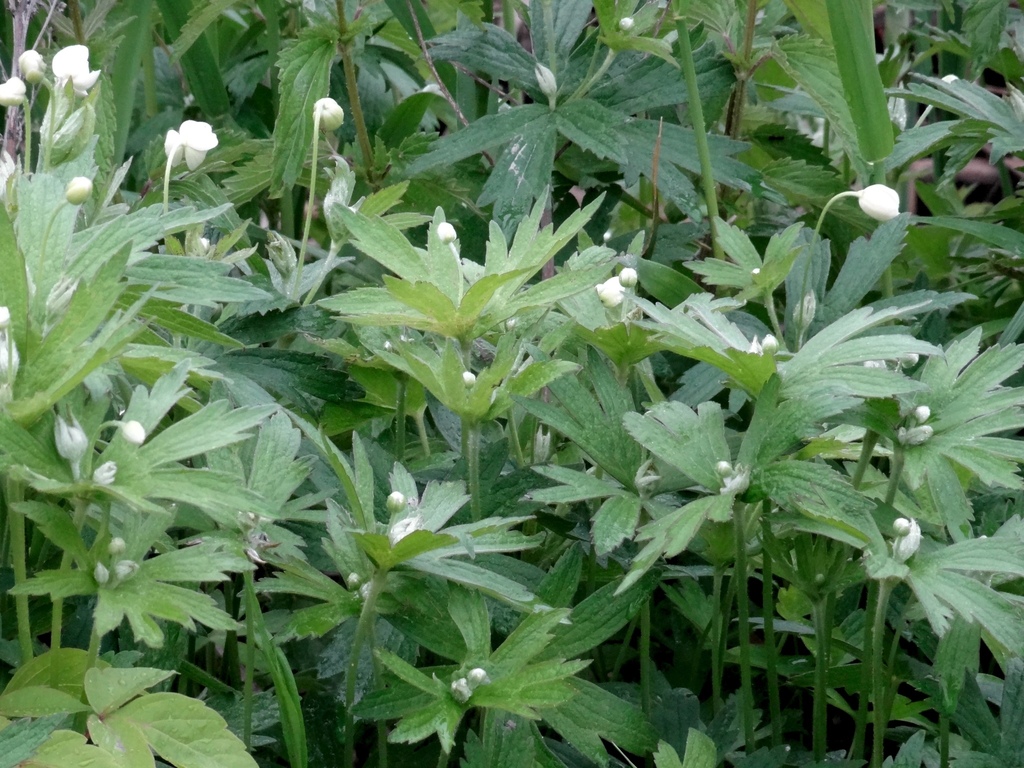
Anemonastrum canadense
- Origin
- North America
- Part used
- Root
- Tradition
- Traditional ethnobotany
Canada anemone, an unassuming inhabitant of the damp woodlands of North America, held a particular place in Native American pharmacopoeias. Nations such as the Chippewa, Meskwaki, and Ojibwe had long known its root, used with cautious respect given how potent it was recognized to be.
Traditional uses
A root for digestive trouble
The dried root was traditionally used in small amounts to ease digestive upset and stomachaches, according to uses reported among several Indigenous peoples of North America.
Traditional use related to women's cycles
Some Indigenous traditions mention a use of the root to help with menstrual irregularities, a use to be considered with the greatest caution in light of current knowledge.
External application on wounds
The crushed root or a decoction was reportedly used externally to cleanse certain wounds, in a traditional astringent role.
A remedy for headaches
A reported traditional use describes the inhalation or application of preparations made from dried root for persistent headaches.
Before you use it
A plant belonging to the buttercup family, several species of which contain irritant or even toxic compounds (protoanemonin); internal use must never be improvised. Strictly discouraged during pregnancy and breastfeeding because of traditional uses related to women's cycles, with a potential risk of miscarriage. The fresh root is irritating to skin and mucous membranes; only root that has been properly dried and prepared by an experienced person should be considered. Never use without the advice of a health professional or a qualified herbalist, as this plant is not intended for everyday domestic use.
The detailed notebook
- Prepared as a paste or decoction
- Traditional duration of use
- Known contraindications
- Related species and their uses
Where to find it
Partner herbalists — available with the detailed notebook.
Sources
PFAF, Wikipedia