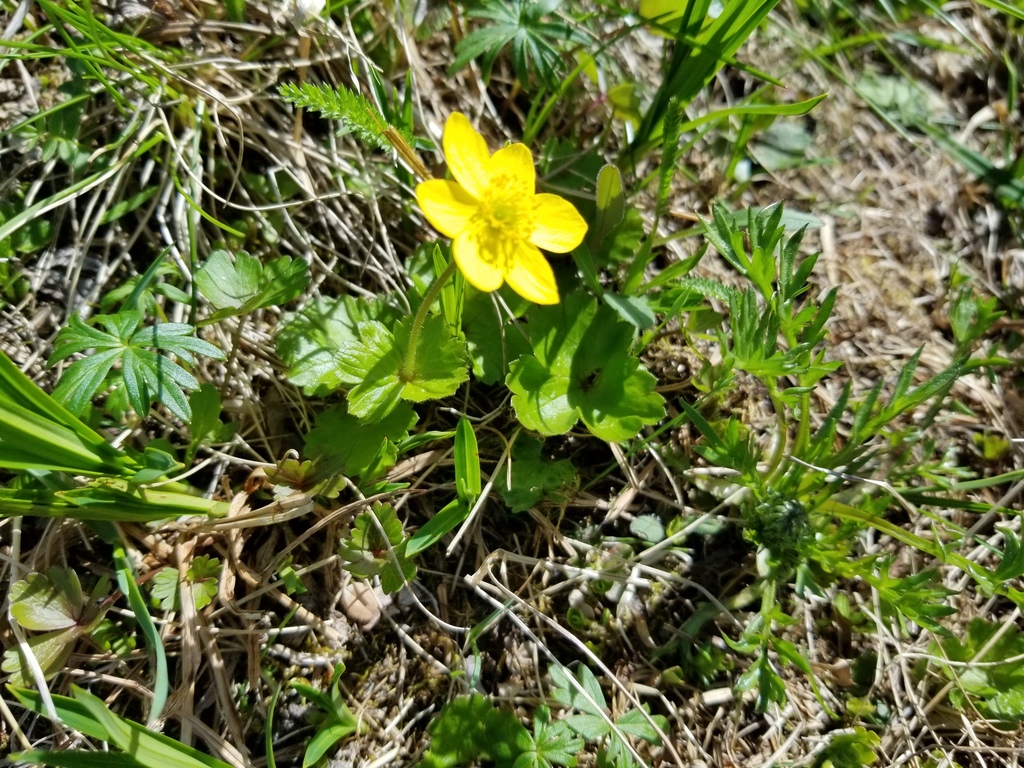
Anemonastrum richardsonii
- Origin
- North America
- Part used
- Leaves, Root
- Tradition
- Traditional ethnobotany
Richardson's anemone, an unassuming inhabitant of the boreal forests and subarctic meadows of North America, belongs to that great buttercup family which the old herbalists distrusted as much as they respected. The Indigenous peoples of the continent's north knew its cautious use, reserved for precise, short-term applications.
Traditional uses
Traditional application on the skin
The crushed root or bruised leaves were sometimes applied externally to certain skin conditions, according to local traditional practices passed down orally.
Rubs for joint pain
Some communities used a root-based preparation as an external rub to relieve localized pain, in the manner of other irritant anemones and buttercups.
Traditional use by inhalation
The dried leaves were reportedly occasionally used as a fumigation in certain ritual or traditional healing practices, though this use is not widely documented.
A plant of Indigenous traditions
Like many wild anemones, this plant held a place in certain ceremonial or protective uses within the Indigenous cultures of the North.
Before you use it
All parts of the fresh plant contain protoanemonin, an irritant compound potentially toxic on contact or ingestion. Internal use is strongly discouraged without supervision by a qualified professional. Never apply to broken skin or mucous membranes; a patch test is recommended before any external use. This plant should be kept out of the reach of children and strictly avoided in pregnant or breastfeeding women.
The detailed notebook
- Prepared as a paste or decoction
- Traditional duration of use
- Known contraindications
- Related species and their uses
Where to find it
Partner herbalists — available with the detailed notebook.
Sources
PFAF, Wikipedia