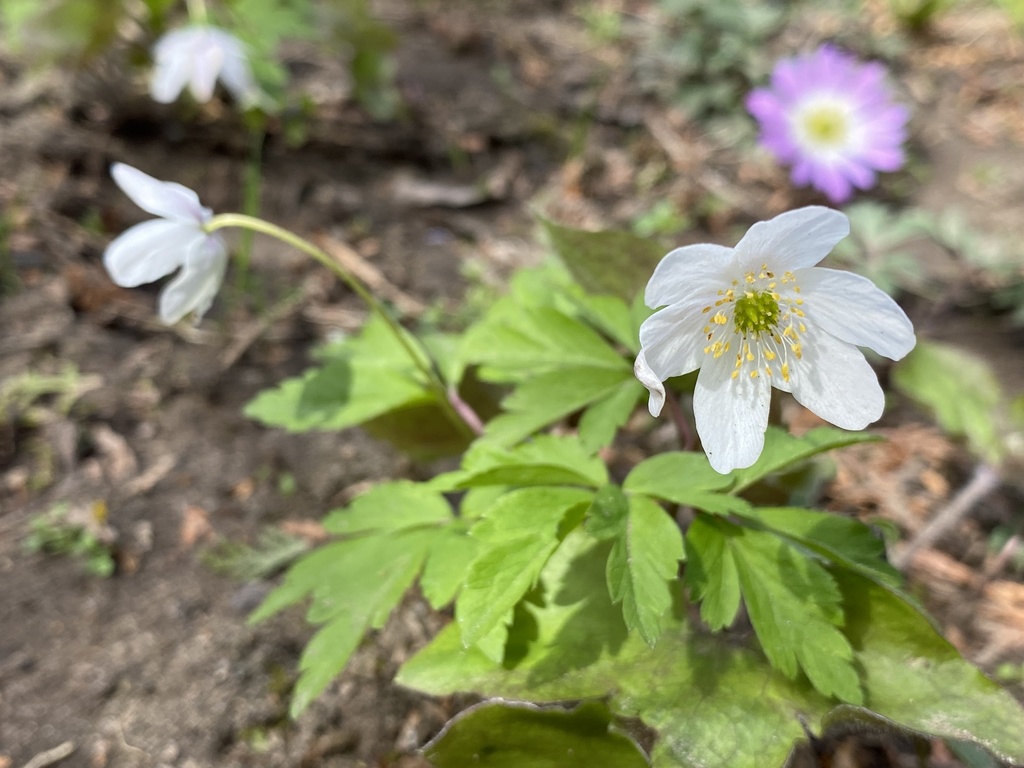
Anemonoides nemorosa
- Origin
- Europe
- Part used
- Leaves, Root
- Tradition
- Traditional ethnobotany
A discreet messenger of spring, the wood anemone carpets European woodlands with its white veil even before the leaves cover the canopy. Old herbalists were as wary of it as they were respectful, classing it among the ‘acrid’ plants to be handled with great caution. Its traditional use, rarer than that of other woodland herbs, is more a matter of recorded observation than everyday practice.
Traditional uses
External application to painful areas
The crushed fresh plant was traditionally applied, briefly and under supervision, to certain joint pains or neuralgias externally, due to its reputed skin-reddening effect.
Plant for rheumatic complaints
In certain parts of rural Europe, the dried root went into preparations intended to relieve rheumatism, always in tiny amounts and only occasionally.
Occasional use in folk veterinary medicine
A few herbalist notebooks report a marginal use with livestock for skin conditions, reflecting more an ethnobotanical curiosity than a widespread practice.
Indicator plant and symbol of renewal
Beyond any therapeutic use, the wood anemone was mostly observed as a sign of the forest's awakening and as an indicator of old, stable soils.
Before you use it
A plant that is toxic when fresh, containing substances irritating to skin and mucous membranes; prolonged contact can cause burns or blisters. Ingestion, even in small amounts, is not recommended and can cause serious digestive upset; never use internally without qualified professional advice. Strictly contraindicated for pregnant or breastfeeding women, and for children, due to its irritant potential and the scarce documentation on its safety. Drying partially reduces the toxicity but does not eliminate it; any use, even external, should remain brief and supervised.
The detailed notebook
- Prepared as a paste or decoction
- Traditional duration of use
- Known contraindications
- Related species and their uses
Where to find it
Partner herbalists — available with the detailed notebook.
Sources
PFAF, Wikipedia