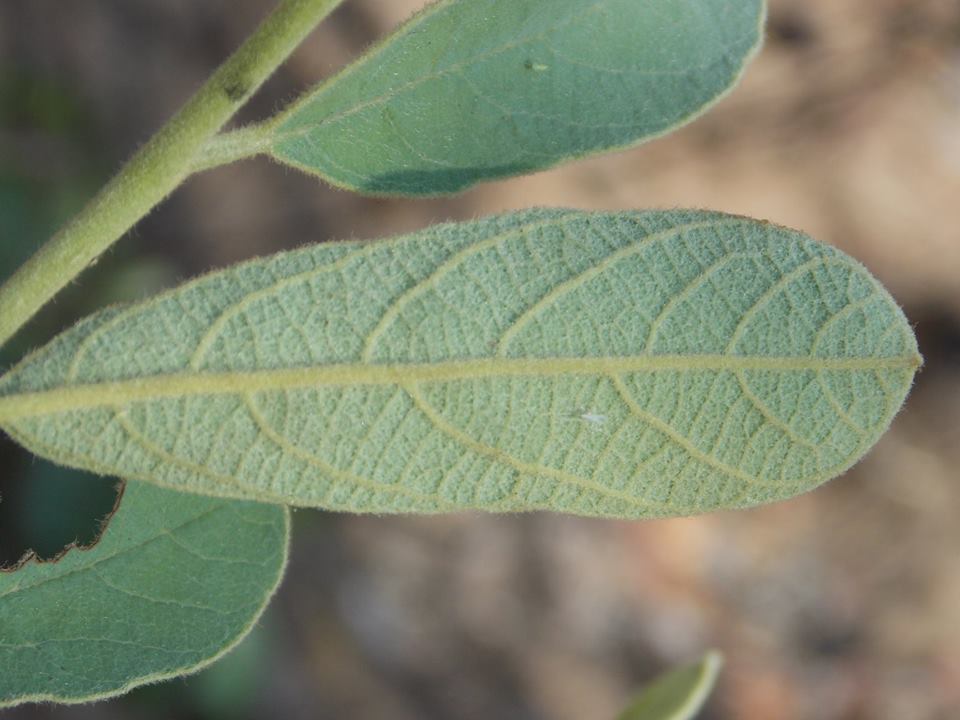
Annona stenophylla
- Origin
- Africa
- Part used
- See detailed notebook
- Tradition
- Traditional ethnobotany
A discreet shrub of the savannas of Southern and Central Africa, Annona stenophylla often grows buried in sandy soils, letting only its low stems emerge. Communities that have long lived alongside it recognize uses related to infections and digestion, passed down orally from generation to generation. Its modest fruit and sturdy roots make it a discreet plant, but one faithfully cited in local folk pharmacopeia.
Traditional uses
Traditional support during feverish states
The roots and bark are traditionally used as a decoction in certain regions of Southern Africa to help with feverish and infectious episodes. This use belongs to oral tradition rather than to established scientific validation.
Soothing digestive troubles
A root decoction was traditionally used to relieve stomach aches and temporary intestinal troubles in local folk uses.
Application on wounds and skin conditions
Preparations made from bark or crushed root have been reported as traditional external applications on certain wounds or skin irritation.
A traditional antiparasitic use
In certain local pharmacopeia, the plant is cited among the traditional remedies used against intestinal parasites, though this use has not been the subject of thorough documentation.
What to know before use
The chemical composition of this plant remains little documented scientifically; caution is warranted regarding its potential toxicity. Like other species of the genus Annona, it may contain compounds whose long-term effects on the nervous system are still under study; avoid prolonged or repeated use. Use not recommended for pregnant or breastfeeding women, as well as young children, for lack of sufficient safety data. Do not combine with medication treatment without the advice of a health professional, due to a poorly understood risk of interactions.
The detailed notebook
- Prepared as a paste or decoction
- Traditional duration of use
- Known contraindications
- Related species and their uses
Where to find it
Partner herbalists — available with the detailed notebook.
Sources
PFAF, Wikipedia