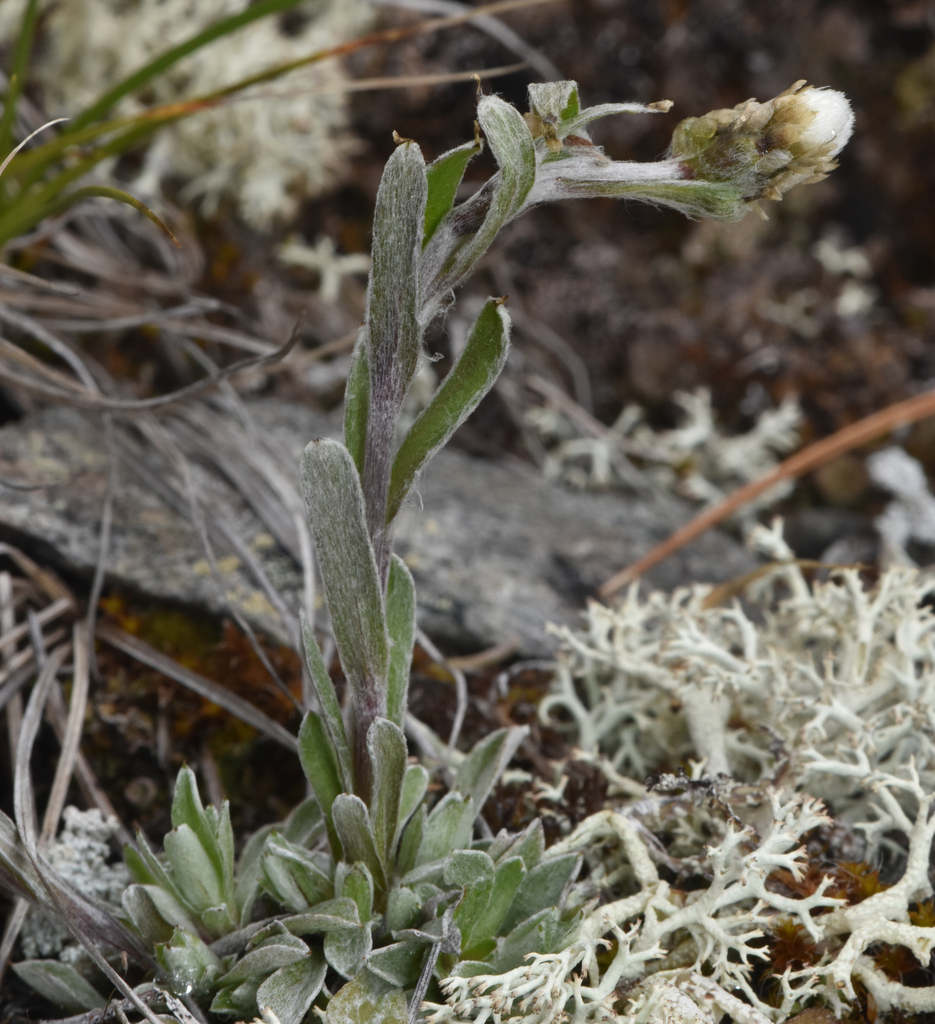
Antennaria howellii
- Origin
- North America
- Part used
- Leaves
- Tradition
- Traditional ethnobotany
An unassuming inhabitant of open woodlands and dry meadows in North America, Antennaria howellii, sometimes called "pussytoes," takes its name from its woolly flower heads evoking small cat paws. Indigenous peoples and herbalists of the boreal regions gave it a modest but steady place among everyday remedies.
Traditional uses
Traditional digestive support
The leaves were sometimes infused to help with slow digestion or discomfort after meals, according to North American folk uses.
Care for minor wounds
As a local application, the crushed leaves or a compress traditionally served to soothe minor skin irritation and scrapes.
Soothing for the airways
Some traditions report the use of a leaf infusion to soothe the throat and help with mild colds.
A calming evening tea
A light leaf-based preparation was sometimes drunk in the evening, for a traditional purpose of general relaxation.
Before you use it
A plant poorly documented by modern research: favor moderate, occasional use. Discouraged for pregnant or breastfeeding women for lack of data. If in doubt, undergoing treatment, or for prolonged use, seek the advice of a health professional. Reserve skin use for healthy skin, free of deep wounds or infection.
The detailed notebook
- Prepared as a paste or decoction
- Traditional duration of use
- Known contraindications
- Related species and their uses
Where to find it
Partner herbalists — available with the detailed notebook.
Sources
PFAF, Wikipedia