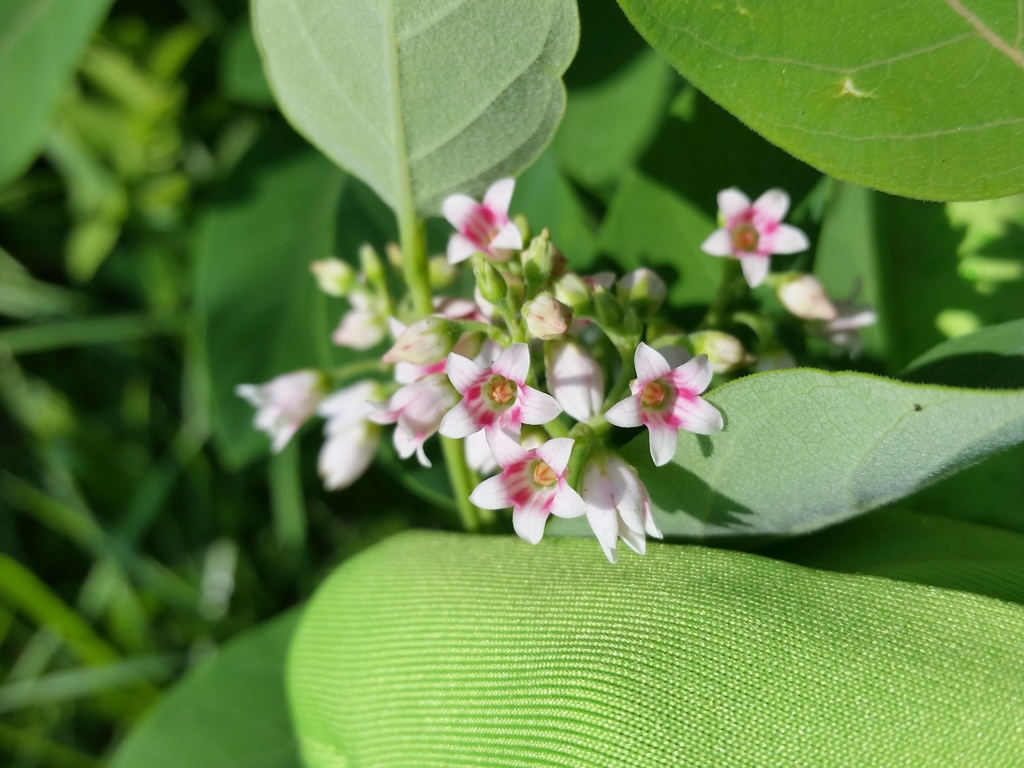
Spreading dogbane
- Origin
- North America
- Part used
- See detailed notebook
- Tradition
- Traditional ethnobotany
An herb of the sandy soils and wooded edges of North America, spreading dogbane was long known to Indigenous peoples and herbalists of the continent by the name "dogbane," because of its fibrous stems as much as its reputation with animals. Its root, bitter and rich in potent compounds, held a place apart in traditional pharmacopoeias, reserved for experienced hands.
Traditional uses
Traditional support for a tired heart
The dried root was used in small amounts by traditional North American herbalists to support a heart considered weak or sluggish circulation, in the line of other so-called cardiotonic plants.
Water retention and mild swelling
It was traditionally credited with diuretic properties, used to relieve swelling linked to poor circulation or water retention.
External use for skin conditions
Some Indigenous traditions report a use of the latex or a root preparation applied locally to warts or stubborn skin lesions.
A traditional bitter
In very small doses, the bitter root went into preparations meant to stimulate the appetite and digestion, according to an old but poorly detailed use.
Before you use it
A plant containing cardiotonic glycosides related to those of foxglove: never use without supervision by a health professional trained in herbal medicine. Contraindicated during pregnancy, breastfeeding, in children, and in anyone undergoing cardiac treatment (risk of serious interaction, particularly with digoxin and other cardiotonics). The margin between the traditionally used dose and the toxic dose is narrow; an overdose can cause serious heart problems. The fresh latex can irritate skin and mucous membranes; avoid any contact with the eyes.
The detailed notebook
- Prepared as a paste or decoction
- Traditional duration of use
- Known contraindications
- Related species and their uses
Where to find it
Partner herbalists — available with the detailed notebook.
Sources
PFAF, Wikipedia