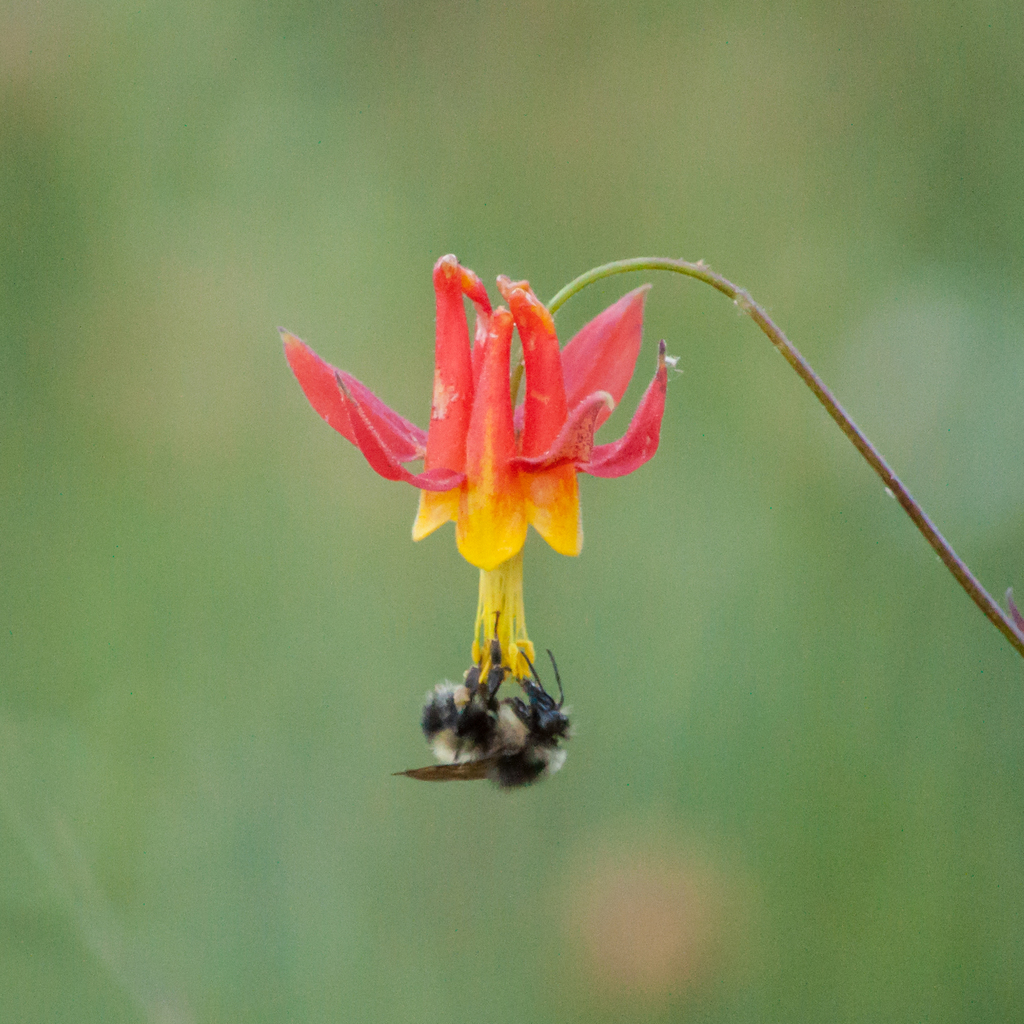
Aquilegia canadensis
- Origin
- North America
- Part used
- Leaves, Seeds/fruits
- Tradition
- Traditional ethnobotany
Canadian columbine, a graceful flower of the woodlands and shaded rock gardens of North America, was known to Indigenous peoples long before the arrival of European settlers. Its fragrant seeds and its leaves went into discreet preparations, reserved for precise and always measured uses, as this plant belongs to a botanical family that calls for caution and respect.
Traditional uses
Rubs for joint pain
The crushed, infused seeds were traditionally used externally to relieve joint pain and headaches, according to certain Native American practices reported by early botanists.
A traditional so-called tonic use
Some Indigenous traditions associated small amounts of seed with a tonic effect on the heart and circulation, a use now considered reserved for experienced connoisseurs because of the plant's sensitivity.
Leaves as a skin wash
A mild leaf decoction sometimes served as an external wash to soothe superficial skin irritation, in certain local North American traditions.
Occasional use for stomachaches
The seeds, in very small amounts, were reportedly used occasionally by certain traditional healers to ease temporary digestive trouble.
Before you use it
All parts of Aquilegia canadensis, and particularly the seeds, contain potentially toxic compounds (cyanogenic glucosides): internal use not supervised by a professional is discouraged. Strictly forbidden in pregnant or breastfeeding women, as well as young children. Do not exceed very small amounts in the reported traditional use, and only under the supervision of an experienced herbalist or a health professional. If in doubt, undergoing medical treatment, or with a fragile health condition, seek medical advice before any use.
The detailed notebook
- Prepared as a paste or decoction
- Traditional duration of use
- Known contraindications
- Related species and their uses
Where to find it
Partner herbalists — available with the detailed notebook.
Sources
PFAF, Wikipedia