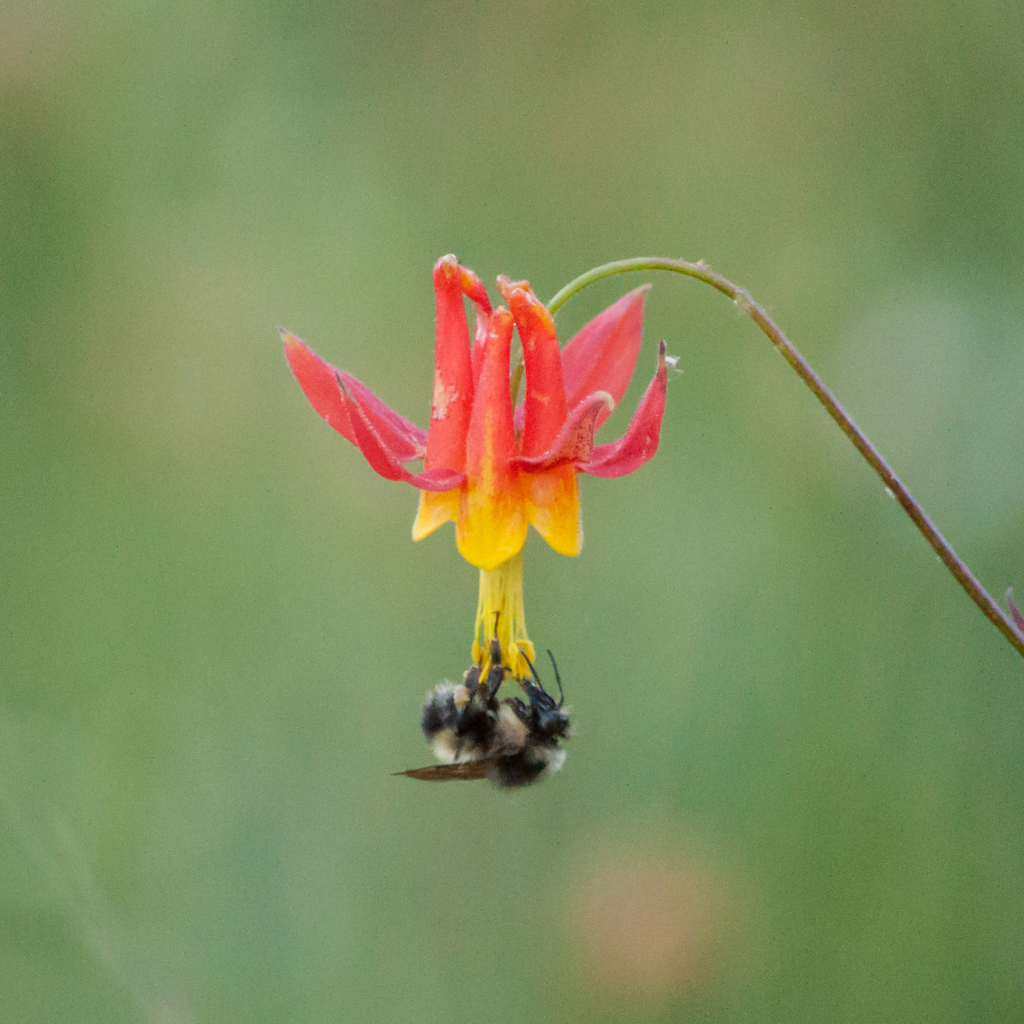
Aquilegia formosa
- Origin
- North America
- Part used
- See detailed notebook
- Tradition
- Traditional ethnobotany
Amid the open woodlands and damp rock gardens of the North American West blooms the crimson columbine, a flower with red and yellow petals hanging like small lanterns. The Indigenous peoples of these regions gave it a discreet but varied role, between bodily care and ritual uses. Its kinship with other columbines, plants reputed to be delicate to handle, nonetheless calls for a cautious, informed approach.
Traditional uses
Traditional care for skin conditions
The crushed roots and leaves were sometimes applied as a poultice to wounds, rashes, or stings, according to certain Indigenous traditions of the Pacific Northwest.
Rubs for joint pain
A root-based preparation was traditionally rubbed on painful joints or rheumatic areas.
Seeds used as a traditional scent
The crushed seeds, with their musky scent, were used by certain groups as a body perfume or to scent the hair, and sometimes during ceremonial practices.
An occasional, measured internal use
Some sources report a very limited internal use of small amounts of root, particularly for mild digestive trouble, but this practice remains poorly documented and is considered risky.
Before you use it
The plant belongs to the buttercup family, known for containing potentially irritant or toxic compounds; unsupervised internal use is discouraged. The seeds, in particular, are considered the riskiest part and should not be ingested without the advice of a professional. Avoid any use in pregnant or breastfeeding women, as well as young children, for lack of safety data. Prolonged contact of the sap or poultice with sensitive skin can cause irritation; always test on a small area beforehand.
The detailed notebook
- Prepared as a paste or decoction
- Traditional duration of use
- Known contraindications
- Related species and their uses
Where to find it
Partner herbalists — available with the detailed notebook.
Sources
PFAF