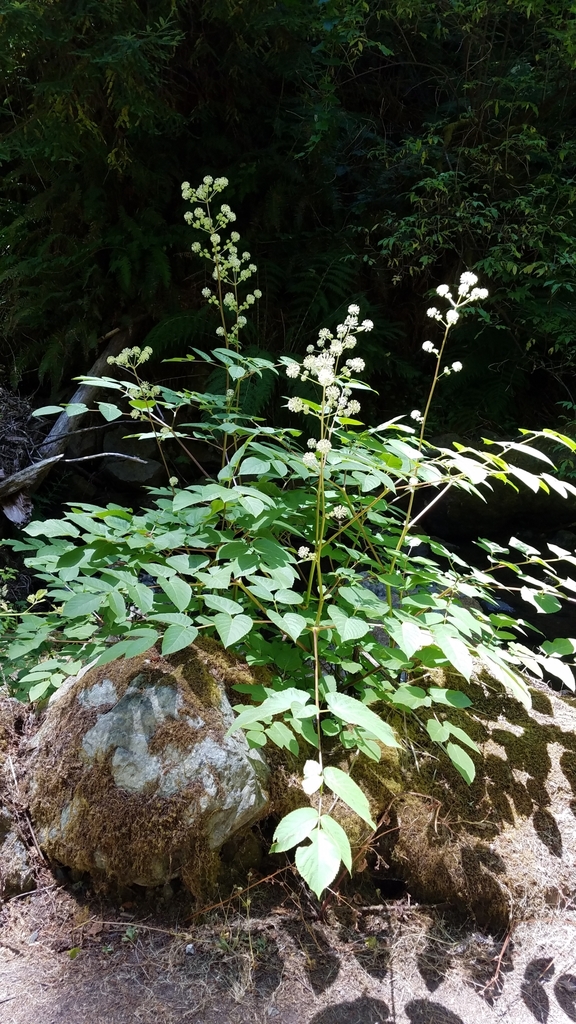
Aralia californica
- Origin
- North America
- Part used
- See detailed notebook
- Tradition
- Traditional ethnobotany
An American cousin of ginseng and Asian aralia, Aralia californica grows along the shaded waterways of the Pacific coast, from northern California to Oregon. The Indigenous peoples of these regions, notably the Pomo and Yurok, had long known its resinous, aromatic root, used in the local traditional pharmacopoeia. Sometimes nicknamed "California spikenard," it belongs to the great Araliaceae family, renowned for its tonic roots.
Traditional uses
Traditional support for the airways
The root was traditionally prepared as a decoction to help with respiratory ailments, coughs, and colds, according to uses reported by the tribes of Northern California.
A traditional use for joint pain
Some ethnobotanical sources mention a use as a poultice or decoction to ease muscle and joint pain.
A traditional digestive tonic
Like other members of the Araliaceae family, the root was sometimes used as a general and digestive tonic in traditional Native American medicine.
Traditional wound care
The crushed root or a poultice was reportedly used occasionally to treat wounds and skin irritation, according to local oral tradition.
Before you use it
A plant little studied scientifically: its use should remain cautious and supervised by a health professional or an experienced herbalist. Avoid any use in pregnant or breastfeeding women or young children, for lack of sufficient safety data. Do not confuse it with other Aralia species or shaded-woodland plants resembling this species, some of which can be toxic. Practice reasonable harvesting: the species is not grown on a large scale, and its wild populations must be preserved.
The detailed notebook
- Prepared as a paste or decoction
- Traditional duration of use
- Known contraindications
- Related species and their uses
Where to find it
Partner herbalists — available with the detailed notebook.
Sources
PFAF