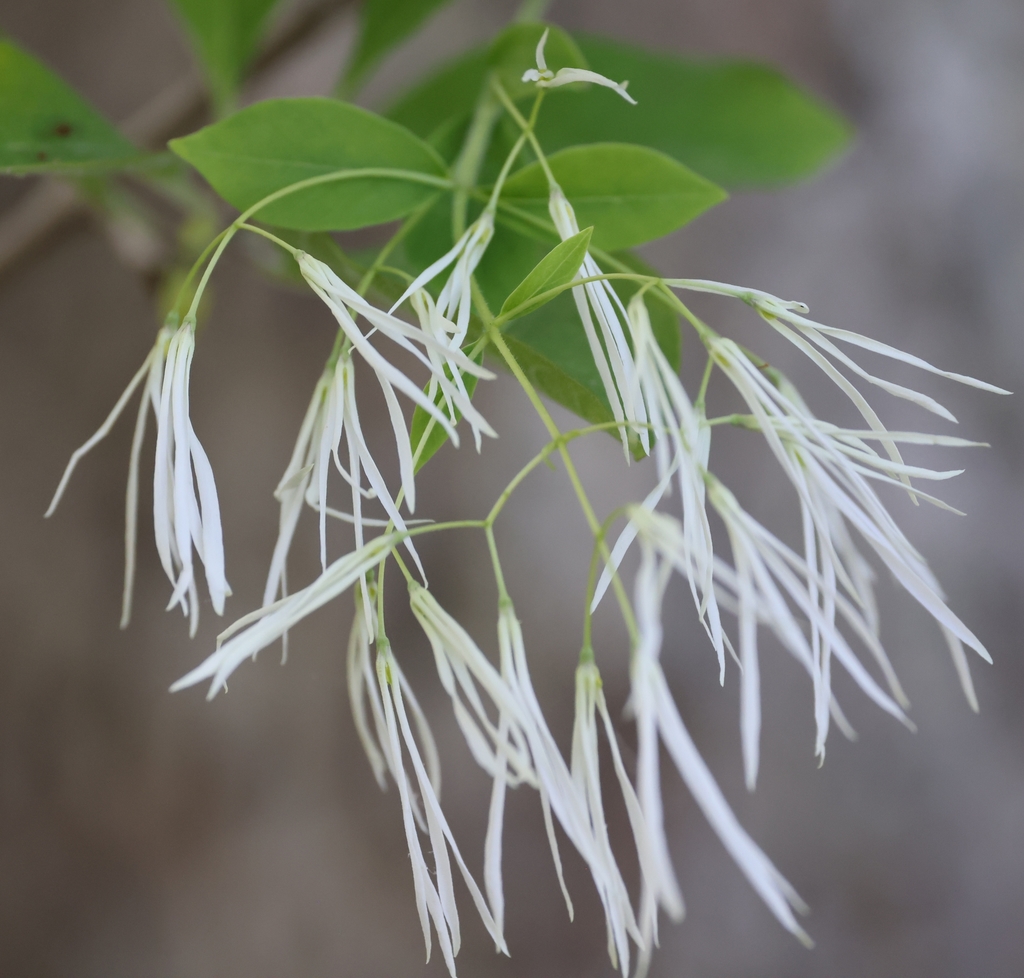
Fringetree
- Origin
- North America
- Part used
- See detailed notebook
- Tradition
- Traditional ethnobotany
Native to the damp woodlands of North America, the fringetree owes its name to the clusters of white, thread-like flowers that dress it in spring, evoking a light dusting of snow on its branches. Native American healers, and later the practitioners of 19th-century eclectic medicine, held its root bark in high esteem for supporting the liver and digestion.
Traditional uses
Traditional liver support
The root bark was traditionally used to support liver and bile function, particularly for heavy digestion or a dull complexion associated with a sluggish liver.
Stimulating the gallbladder
Eclectic herbalists recommended this bark to promote bile flow, for a cleansing purpose after dietary excess.
A traditional cleansing use
Because of its supposed action on the liver, the plant was sometimes included in cleansing regimens meant to improve the look of the skin.
Help with mild fevers
Some traditional healers used a mild bark decoction to help with temporary feverish states, alongside other remedies.
Before you use it
A plant poorly documented by modern research: reserve it for supervised use by a health professional or an experienced herbalist. Discouraged for pregnant or breastfeeding women, for lack of sufficient safety data. Avoid in cases of diagnosed liver or gallbladder trouble (gallstones, obstruction), without prior medical advice. Do not use in children, and avoid any prolonged self-medication.
The detailed notebook
- Prepared as a paste or decoction
- Traditional duration of use
- Known contraindications
- Related species and their uses
Where to find it
Partner herbalists — available with the detailed notebook.
Sources
PFAF