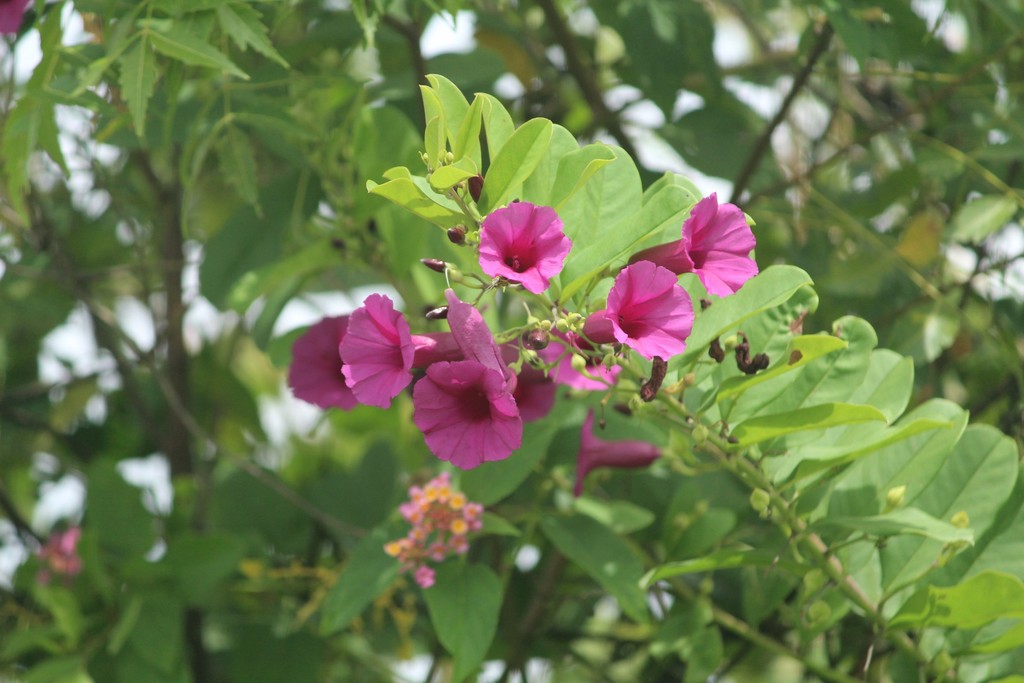
Argyreia cuneata
- Origin
- Asia
- Part used
- See detailed notebook
- Tradition
- Traditional ethnobotany
In the warm regions of India, Argyreia cuneata grows discreetly in the undergrowth, its silvery leaves unmistakable. Local folk traditions have long given it a modest but steady place in field pharmacopoeia, particularly for skin care and everyday minor ailments. Its use, however, remains poorly documented outside regional Indian knowledge, which calls for a cautious reading of its supposed virtues.
Traditional uses
Applied to wounds and irritation
Crushed leaves, or a paste made from the fresh plant, were traditionally applied as a poultice to minor wounds, cuts, and skin irritation in certain regions of India.
Traditional digestive support
Some folk practices report the use of root- or leaf-based preparations to soothe mild digestive discomfort, although this use is poorly formalized in classical texts.
Traditional anti-inflammatory use
The plant is sometimes mentioned in folk use as support against localized inflammation, in the form of a poultice or external application.
Folk remedy for fever
In certain rural Indian traditions, a light decoction of the plant is said to have been used to accompany feverish episodes, alongside other local remedies.
Before you use it
A scientifically little-studied plant: its internal and external use should be discussed with a healthcare professional or qualified herbalist before any use. Avoid any use during pregnancy or breastfeeding, as well as in young children, for lack of safety data. Do not use while on medication without medical approval, as interactions are not documented. Reserve external use for skin without deep lesions, and stop application in case of redness or irritation.
The detailed notebook
- Prepared as a paste or decoction
- Traditional duration of use
- Known contraindications
- Related species and their uses
Where to find it
Partner herbalists — available with the detailed notebook.
Sources
PFAF