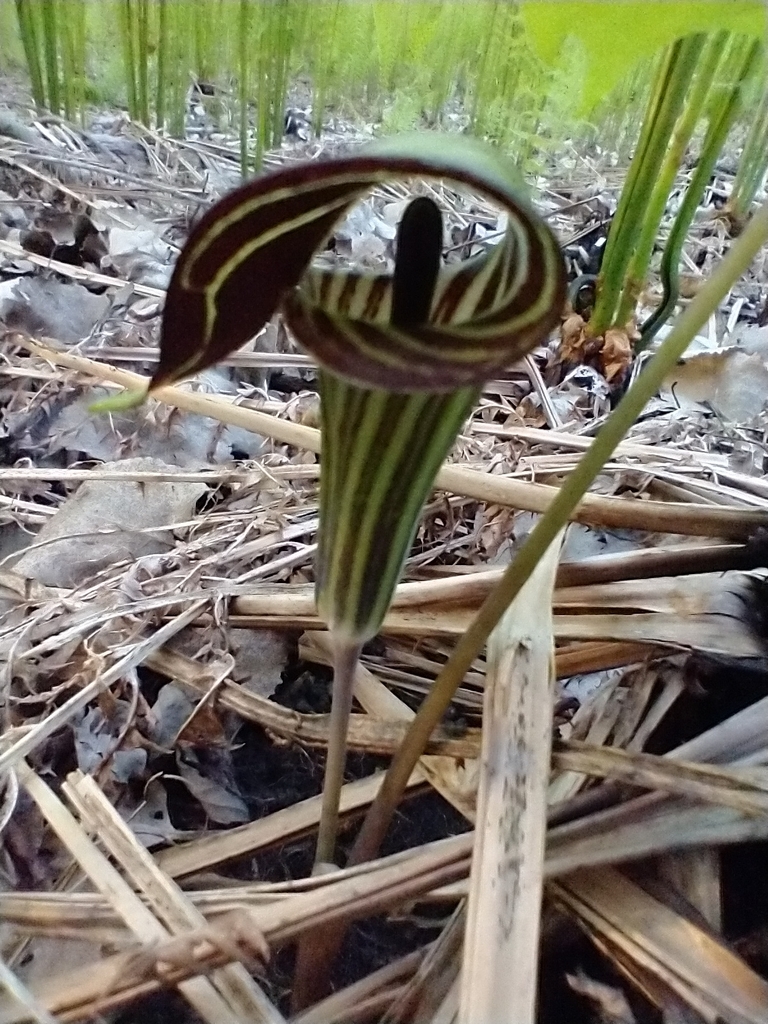
Arisaema triphyllum
- Origin
- North America
- Part used
- Stem
- Tradition
- Traditional ethnobotany
Known to the Native Americans of North America as "Jack-in-the-pulpit" or Indian turnip, Arisaema triphyllum is a woodland plant recognizable by its hood-shaped spathe. Its use goes back to the Indigenous peoples, who had developed precise preparation techniques to neutralize its natural toxicity before any use.
Traditional uses
A traditional use for respiratory ailments
Native American healers used the dried stem and corm, prepared at length, to ease coughing and throat irritation. This use required rigorous processing of the fresh plant, considered too irritating in its raw state.
A traditional use for digestive trouble
Some Indigenous traditions report the use of very diluted preparations made from dried stem to relieve temporary stomachaches, always after long drying that reduces the irritant crystals.
Traditional external use
The plant, applied as a poultice after preparation, was sometimes traditionally used on the skin for superficial irritation or stings.
A plant of Indigenous knowledge
Beyond its physical uses, Arisaema triphyllum held a particular place in orally transmitted botanical knowledge, its meticulous preparation itself being considered a precious skill.
Before you use it
The whole fresh plant contains calcium oxalate crystals responsible for an intense burning sensation in the mouth, throat, and digestive mucous membranes on contact or raw ingestion. Never consume the plant fresh or insufficiently dried: only long, thorough dehydration can reduce (without fully eliminating) the irritant risk. Use discouraged for pregnant or breastfeeding women, children, and in case of doubt about preparation; the advice of a qualified professional is essential before any internal use. Do not confuse it with other edible roots or stems; certain botanical identification is required before any harvesting.
The detailed notebook
- Prepared as a paste or decoction
- Traditional duration of use
- Known contraindications
- Related species and their uses
Where to find it
Partner herbalists — available with the detailed notebook.
Sources
PubMed, Wikipedia