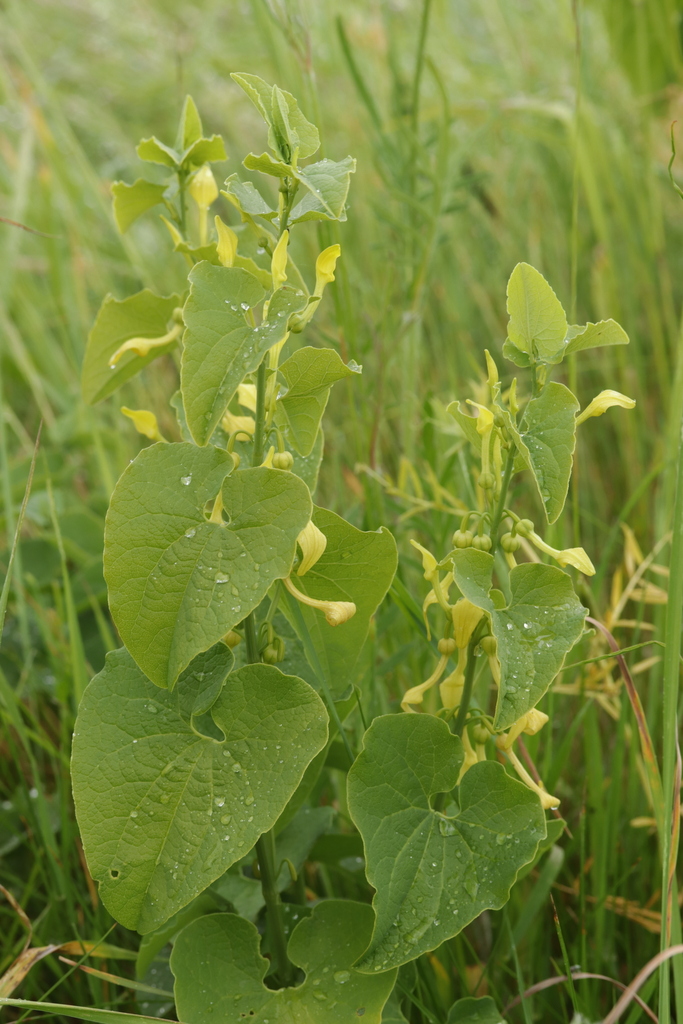
Birthwort
- Origin
- Europe
- Part used
- See detailed notebook
- Tradition
- Traditional ethnobotany
Birthwort has accompanied European herbalists since antiquity, its very name echoing "aristos" and "lokheia" — the best way to aid childbirth in ancient Greek. The ancients considered it a powerful plant, reserved for expert hands, and its use gradually became rarer as its toxicity came to be better understood.
Traditional uses
Traditional aid for childbirth
In old folk traditions, birthwort was used to aid childbirth and the expulsion of the placenta, a use now abandoned due to identified risks.
Application to stubborn wounds
The root was once used as a poultice to clean infected wounds or skin ulcers, according to old herbalist notebooks.
A so-called cleansing plant
It was among the plants reputed to be drainers, believed to help the body eliminate toxins, in a traditional view of health now called into question.
Use for rheumatic pain
Some old texts mention its external use for joint pain and gout, in the form of compresses.
Before you use it
Classified as a toxic plant: it contains aristolochic acid, recognized as nephrotoxic and carcinogenic, and its internal use is now formally not recommended. Banned from sale and herbalist use in many countries, including France, due to documented serious kidney damage. Strictly contraindicated during pregnancy and breastfeeding despite its historical use related to childbirth. Never use without strict medical supervision; this entry is presented for historical purposes only and does not constitute a recommendation for use.
The detailed notebook
- Prepared as a paste or decoction
- Traditional duration of use
- Known contraindications
- Related species and their uses
Where to find it
Partner herbalists — available with the detailed notebook.
Sources
PFAF