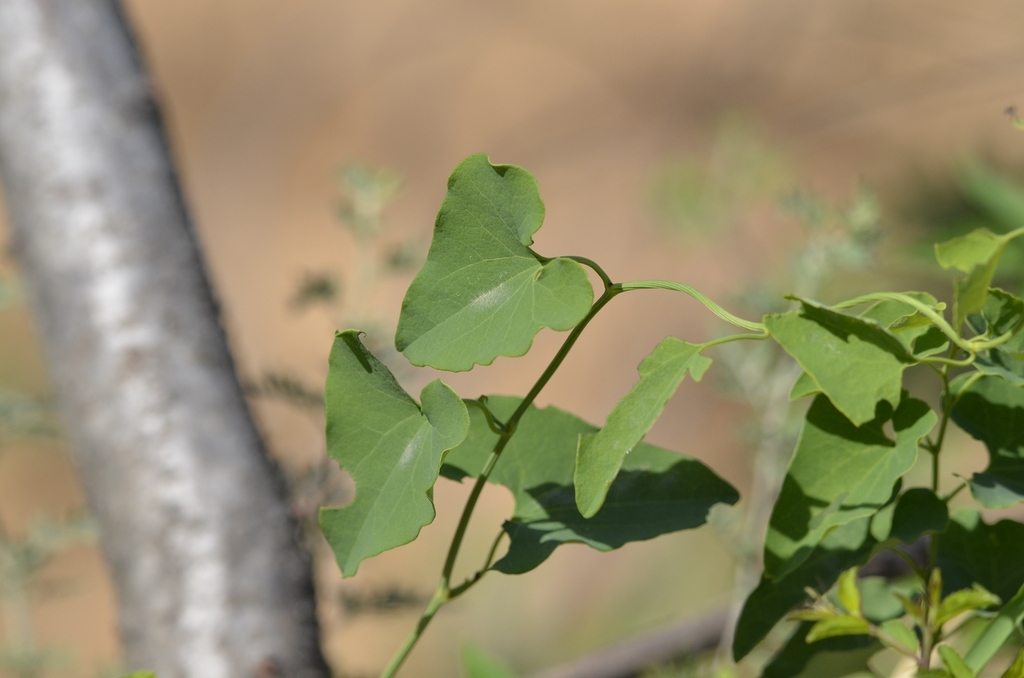
Aristolochia contorta
- Origin
- Asia
- Part used
- See detailed notebook
- Tradition
- Traditional ethnobotany
In old East Asian pharmacopoeia treatises, Aristolochia contorta appears under the name Ma Dou Ling, its dry, twisted fruits long recognized by traditional herbalists. This climbing vine, with its distinctive lantern-shaped capsules, held a particular place in old practices that are today widely called into question.
Traditional uses
Coughs and lung conditions
The dried fruits were traditionally used as a decoction to soothe coughs and breathing difficulties in old Chinese medicine.
Occasional digestive troubles
A historical use of the seeds to relieve certain abdominal discomforts is reported, always in highly diluted preparations and for short periods.
Traditional circulatory support
In some old texts, the plant was associated with a use intended to promote circulation, though this use is neither validated nor recommended today.
Before you use it
This plant contains aristolochic acids, substances recognized as nephrotoxic and carcinogenic; its use is today banned or heavily restricted in many countries, including France. Absolutely to be avoided in pregnant or breastfeeding women, as well as in children. Never use without the guidance of a healthcare professional qualified in phytotherapy, due to serious risks to the kidneys. No home dosing should ever be attempted; this entry is presented for historical and informational purposes only.
The detailed notebook
- Prepared as a paste or decoction
- Traditional duration of use
- Known contraindications
- Related species and their uses
Where to find it
Partner herbalists — available with the detailed notebook.
Sources
PFAF, Wikipedia