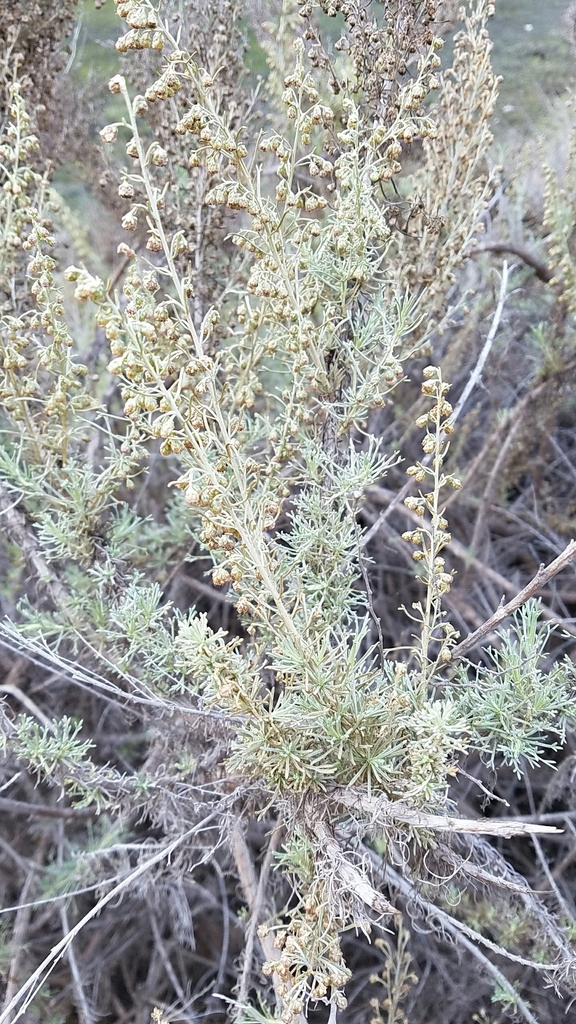
Artemisia californica
- Origin
- North America
- Part used
- Leaves
- Tradition
- Traditional ethnobotany
On the coastal hills of California, the mugwort known as "California sagebrush" scents the dry air with its camphor-like fragrance. The Indigenous peoples of the region, notably the Chumash and Tongva, held an old and respected use for it, both to purify spaces and to relieve everyday ailments.
Traditional uses
A fumigation for the airways
The dried leaves were traditionally burned or inhaled as a vapor to clear the airways during colds and congestion.
Traditional care for skin conditions
As a poultice or wash, the fresh foliage was applied to insect stings, irritation, and minor wounds according to Native American tradition.
A mild digestive infusion
A mild leaf infusion was sometimes drunk to ease minor digestive trouble and stomachaches.
A purifying fumigation
The dried leaves, bundled together, served as a fumigation during ceremonies to purify a place, a person, or objects.
Before you use it
A plant of the mugwort family, not to be used during pregnancy or breastfeeding because of a reported traditional emmenagogue use. Prolonged or high-dose internal use is discouraged without the advice of a qualified professional, because of powerful aromatic compounds (including ketones) that can irritate the nervous system. Avoid in people allergic to plants of the daisy family (daisies, mugworts, ragweed). Do not confuse it with other mugworts with different uses and dosages; seek the advice of an experienced herbalist before any internal use.
The detailed notebook
- Prepared as a paste or decoction
- Traditional duration of use
- Known contraindications
- Related species and their uses
Where to find it
Partner herbalists — available with the detailed notebook.
Sources
Wikipedia